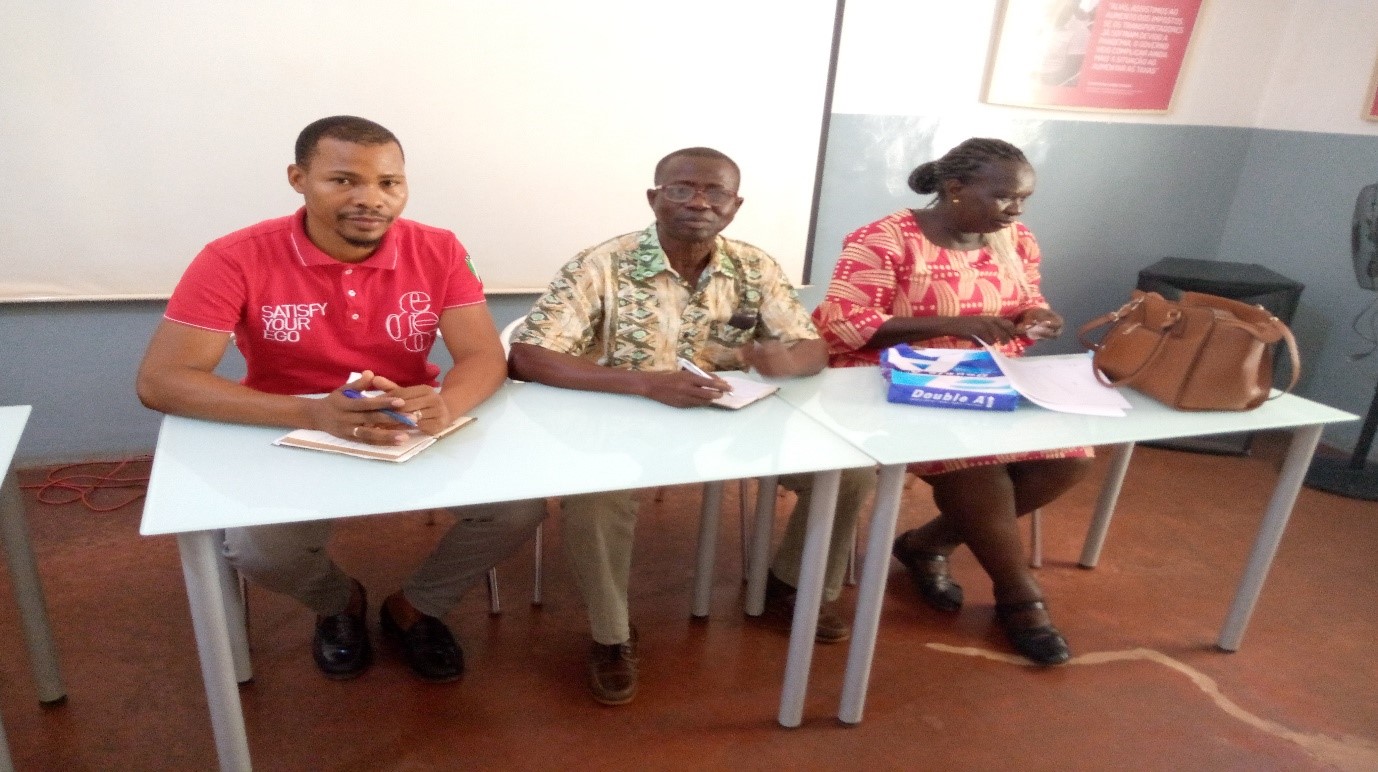
On August 22, 2022, a training session was held in Bissau, in the meeting room of the “Casa dos Direitos” (House of Rights), with the aim of familiarizing them with the different questions of the survey aimed at understanding the situation of journalists in Guinea-Bissau.
This training session, led by the coordinator of the survey, João Vaz, and the coordinator and technician of AMPROCS, Paulo Melo and Baducaram Imbenque respectively, was attended by six respondents, i.e. six people who later became regional antennae as part of the Observatory of Women and Journalists in a Context of Instability in Guinea-Bissau project. They are Mariclod Djata from the Autonomous Sector of Bissau (SAB), Fatumata Candé from the Bafatá Region, Nhima Mbumbé from the Bolama Bijagós Region, Beatriz Soares da Gama from the Biombo Region, Júlio Quintino from the Tombali Region and Sana Manjam from the Quinara Region.
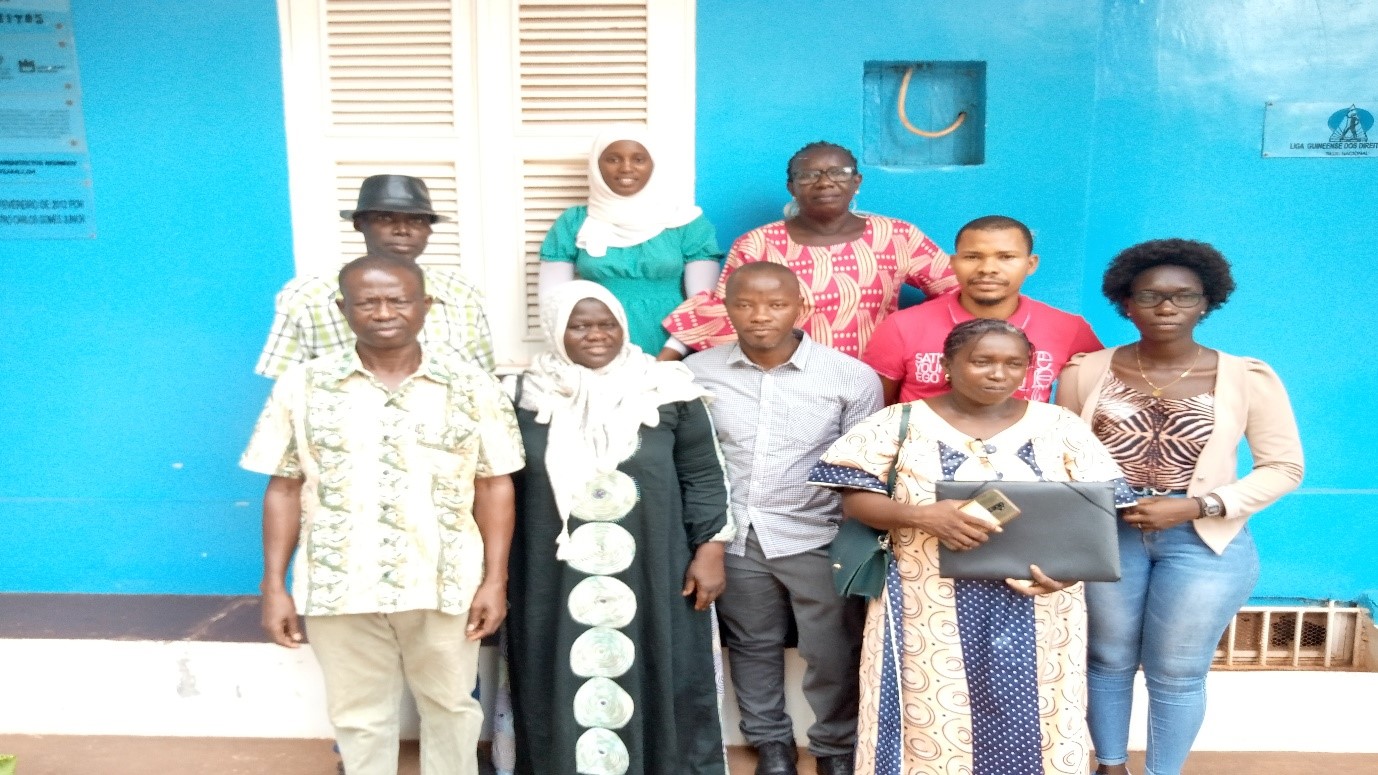
Mariclod Djata from the Autonomous Sector of Bissau (SAB); Fatumata Candé from the Bafatá Region; Nhima Mbumbé from the Bolama Bijagós Region; Beatriz Soares da Gama from the Biombo Region; Júlio Quintino from the Tombali Region; and Sana Manjam from the Quinara Region.
The other regional antennas, in this case Gabú, SAB, Cacheu and Oio, did not have the opportunity to take part in the training session on the scheduled date, due to the lack of transportation caused by the drivers’ strike, which was observed throughout most of the country.
Meanwhile, three days later, the remaining regional antennas attended and received the training at the House of Rights and their respective survey forms, this time with the project’s technician, Baducaram Imbenque.
The form now being used by the trainers and surveyors is made up of five subheadings: Situation of Journalists and Technicians in the Media, Economic Situation of Journalists, Human Rights/Discrimination, Journalists/Relationship with Power and Respect for Ethics and Deontology. It contains thirty questions with different options that were completed in the field
In this effort to understand the situation of journalists in Guinea-Bissau, the Association of Women Media Professionals (AMPROCS) produced 100 survey forms for the entire national territory, distributing them as follows: SAB with 50 forms, Bafatá with 10, Gabu also with 10, Bolama, Biombo, Cacheu, Oio, Quinara and Tombali with 5 forms each.
According to the guidelines given to the respondents, the survey focused more on women than men, which means that in Bissau, out of 50 respondents, 35 were women and 15 men. In Bafatá and Gabu, 7 of the 10 respondents were women and 3 were men. In Bolama, Biombo, Cacheu, Oio, Quinara and Tombali, where there were 5 respondents each, there were 4 women and 1 man.
The survey was overseen by coordinator João Vaz.
As far as working conditions are concerned, the interviewees once again pointed out that transportation money should be included in budgets to make it easier for them to travel in the field.