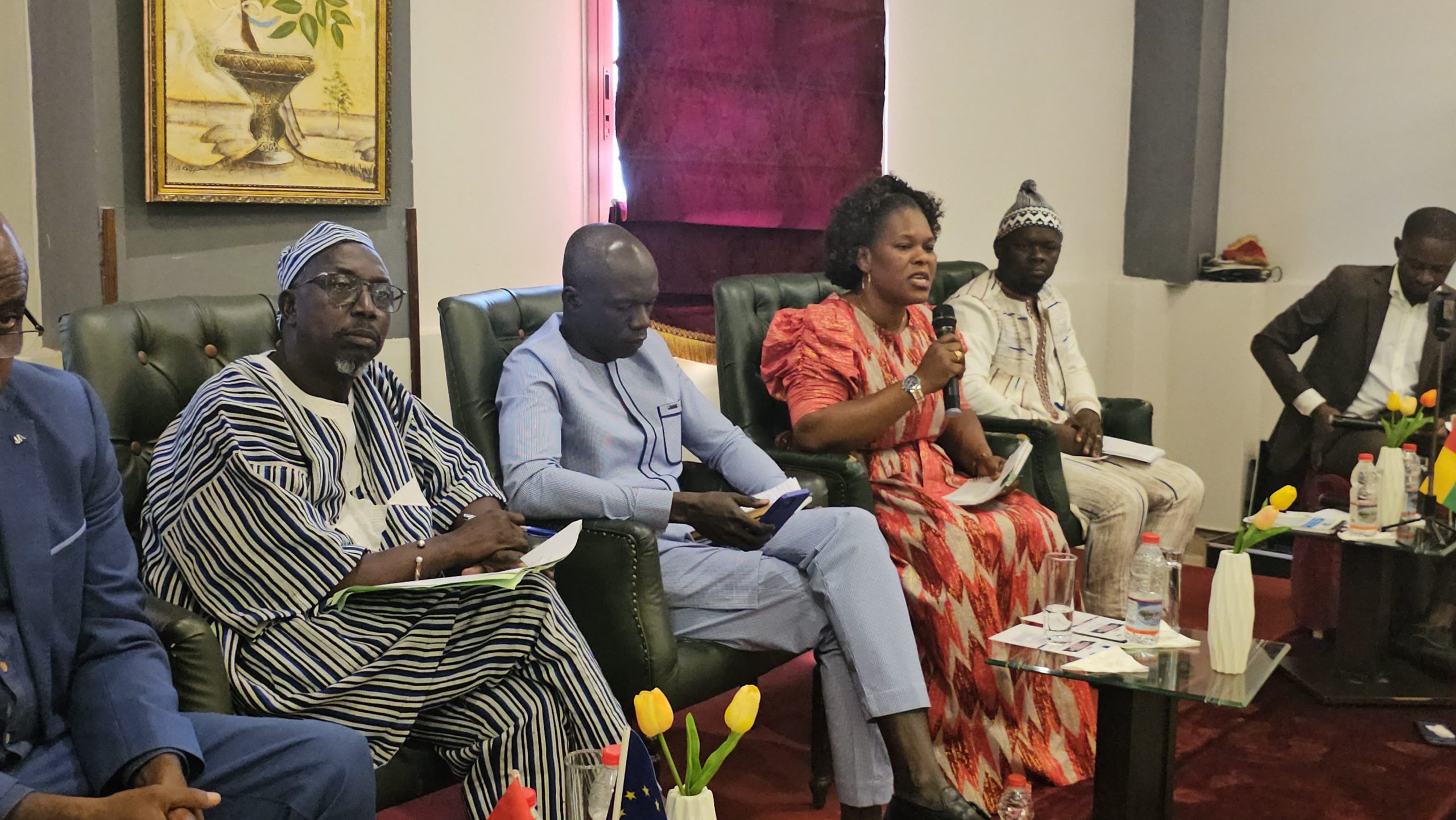
Media actors in Guinea-Bissau have called for reforms to the country’s laws to create a freer space that allows for press freedom and media independence. At a public forum organized jointly by the Media Foundation for West Africa (MFWA) and four local media actors in Bissau – SINJOTECS, AMPROCS, RENARC and OJGB – participants identified the restriction of civic and media space as one of the main challenges facing the media in the country.
The restricted civic space is mainly due to draconian press laws and legislative loopholes that limit access to information for media professionals. Consequently, participants called for legal reforms regarding the country’s press laws.
The forum, held under the theme “Media, Misinformation/Disinformation and Democratic Consolidation in Guinea-Bissau”, also served as the closing ceremony for a three-year media development project implemented by the MFWA from 2021 to 2024.
The forum provided a platform for experts to present speeches and opinions on the topic, followed by a round table that explored the same issues in detail.
Legal structure
Like all the countries in the West African sub-region, Guinea-Bissau is governed by a constitution that guarantees press freedom and media independence. However, in practice, the reality is different. There is a press law that recognizes the status of journalists in the country, but it does not guarantee public access to information.
This reality, combined with the fact that Guinea-Bissau is one of the most politically unstable countries in Africa, prevents journalists from truly holding the government and those in power to account.
Appeals
Participants called for the modernization of the country’s press laws, pointing out that they have become obsolete. In particular, they called for the Press Law to include provisions on access to information. It was also recommended that existing laws be revised to bring them into line with international human and media rights standards, protecting journalists from arbitrary detention and legal harassment. The government was also urged to create accountability mechanisms that allow the media to scrutinize the government without fear of reprisals.
In addition, there were calls for the development of mechanisms to guide security agencies in investigating and redressing abuses against journalists by those involved. Another recommendation was the revision of the law creating the National Council for Social Communication (CNCS), in order to make it more effective in regulating the media, particularly in issuing licenses, monitoring and applying sanctions. There were also calls for specific regulation of social networks and the decriminalization of hate speech.
Ongoing review of press laws
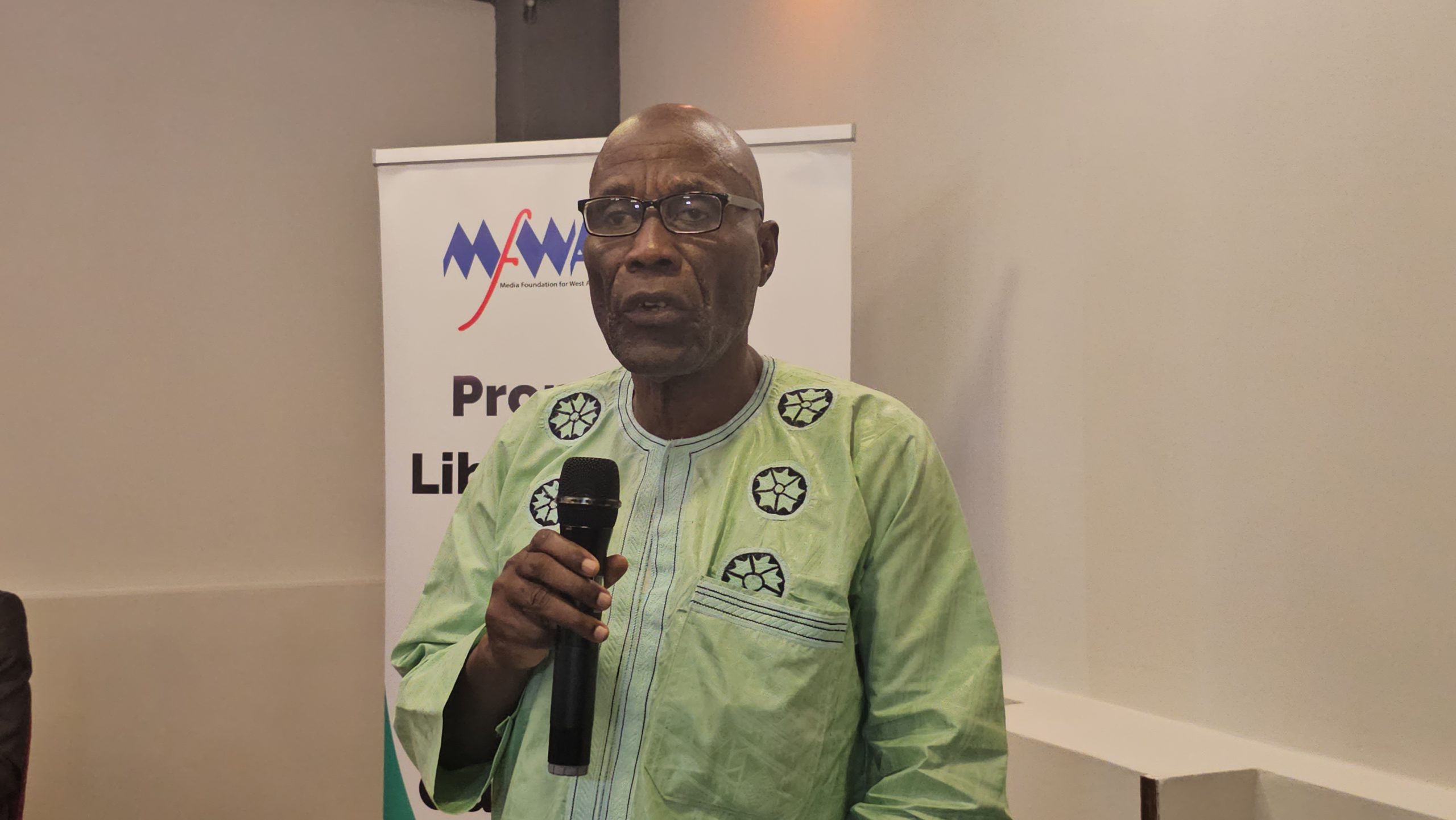
2 Humberto Monteiro, Senior Advisor to the Minister for Social Communication
Among the speakers at the forum was Mr. Humberto Monteiro, Senior Advisor to the Minister of Social Communication, who gave the keynote speech. According to him, the government is updating the country’s laws, including the press laws, and will incorporate the forum’s ideas into the revision process.
“We understand that, in the end, there will be recommendations for the Ministry of Social Communication, which is responsible for managing government policies in the area of social communication. We hope that these recommendations will contribute to improving the legislative package that the government has on the agenda for updating.”
“There is a media legislative package that was approved in 2011 to be updated. Regulations are also being prepared that will bring some order to online media. There is a lot of work to be done. Everyone needs to contribute, professional organizations need to be involved, and we hope that the journalistic class can unite with one voice to propose their contributions to the government, which will be taken into account,” he said.
United efforts to combat threats to press freedom
In her welcome speech, Mrs. Indira Correia Baldé, President of SINJOTECS, MFWA’s MFWA partner in Guinea-Bissau, warned that press freedom and freedom of expression are under threat and called for concerted efforts to combat these threats. “This is a moment of reflection and joy, but also of great responsibility. Freedom of the press and freedom of expression are under threat, but I believe that by fighting together, we will prevail,” said Ms. Baldé.
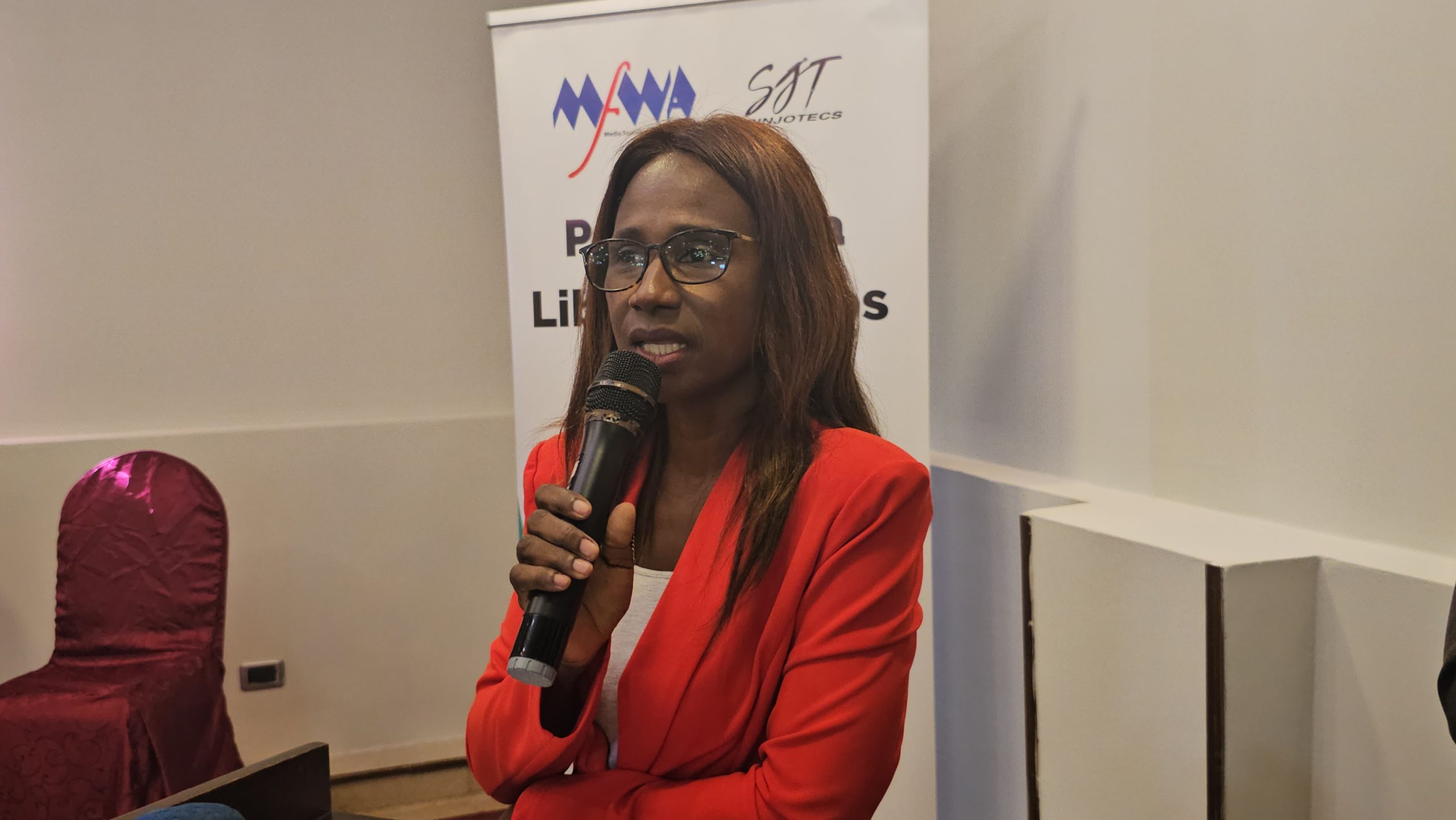
3 Ms. Indira Correia Baldé, President of SINJOTECS
She also stressed the need for professionalism among media professionals, saying: “We must be more and more professional. Without professionalism, we are not serving the people of Guinea-Bissau.”
Adding to the call for unity of purpose, the Acting President of the National Media Council (CNCS), Domingos Meta Camara, warned of the challenges of misinformation/disinformation and hate speech. “The challenges of disinformation and hate speech require collaborative solutions, especially in a country with a history of political crisis.”
He warned that misinformation/disinformation and hate speech have serious negative implications for politics and governance in Guinea-Bissau, calling for adherence to the media framework to protect journalists’ rights.
This same point was emphasized by Mr. Carlos Abaitua Zarza, Attaché for Cooperation, Justice, Security, Gender and Human Rights of the Delegation of the European Union to the Republic of Guinea-Bissau, who fervently warned against hate speech. “Hate speech and intolerance represent a threat to a social and pluralistic democracy,” he said.
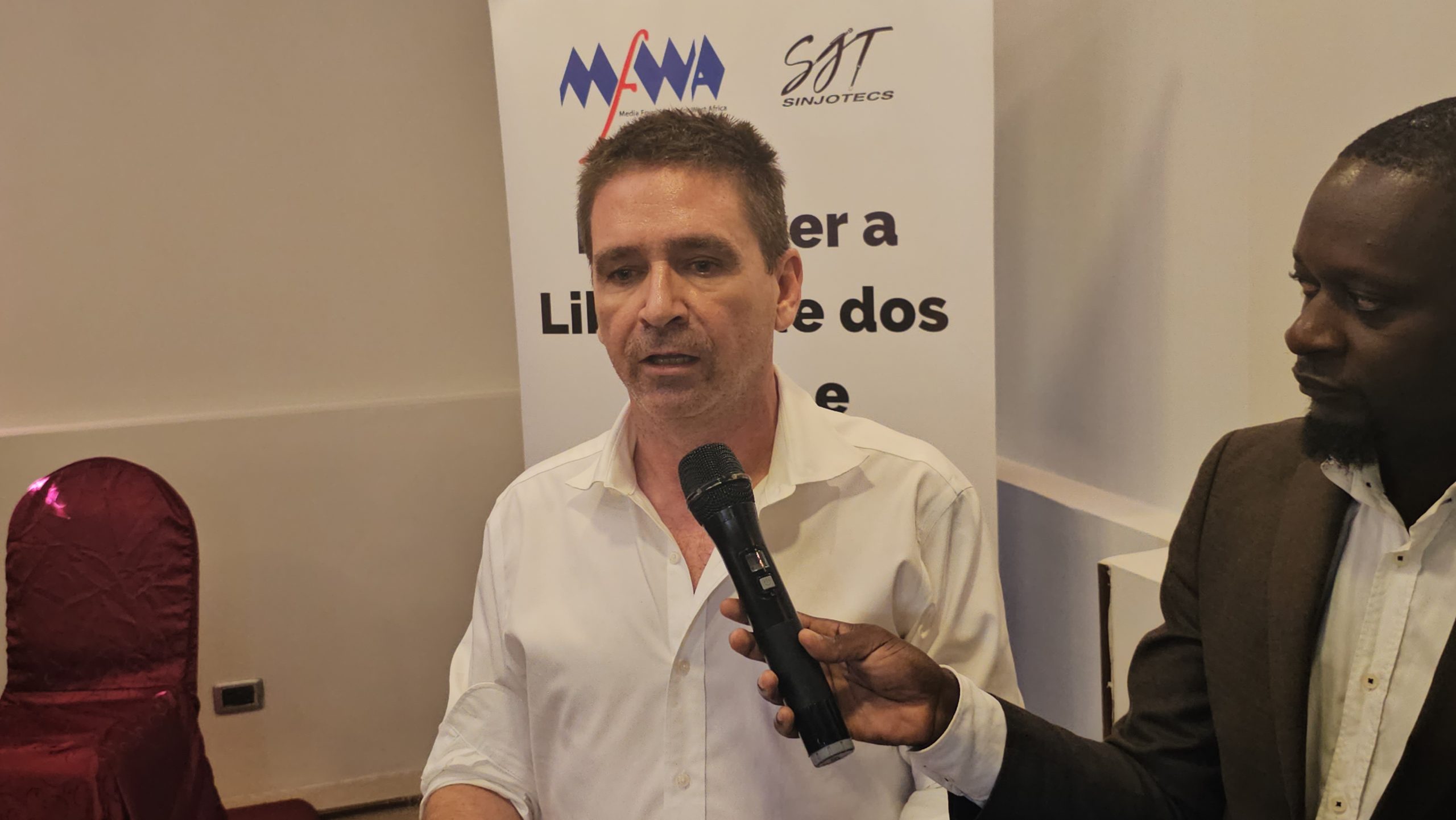
4 Mr. Carlos Abaitua Zarza
Mr. Abaitua Zarza stressed that responsible journalism is fundamental for a quality democracy. He stressed the need for ethical and responsible journalism, which defends human dignity and avoids promoting hate speech, stating: “The responsible practice of journalism is aligned with the defense of democracy and human rights.”
He reaffirmed the European Union’s commitment to continue working with Guinea-Bissau to combat intolerance and strengthen democratic principles, stressing that freedom of expression and freedom of the press are fundamental pillars of any democratic society. “Guinea-Bissau can count on the European Union to continue to help build a free and democratic society and together we will move towards the future.”
One of the highlights of the forum was the delivery of laptops and digital recorders to Rádio Capital FM, as a gesture of solidarity from the MFWA and the European Union in Guinea-Bissau.
“We recognize that Radio Capital’s role goes far beyond being just a news source; it is a pillar in promoting freedom of expression and democracy in Guinea-Bissau. This new equipment represents our commitment to supporting the recovery and strengthening of the vital work that the radio continues to do for society.”
“We hope that, with this support, Radio Capital can continue its operations with renewed strength and remain an independent, resilient and fundamental voice for the consolidation of our country’s democracy” said Mr. Abaitua Zarza during the presentation.