The Media Foundation for West Africa (MFWA) and the media actors in Guinea Bissau strongly condemn the recent act of mutiny by elements of the security forces in Guinea Bissau. We call on all actors in the country’s political space to preserve the fragile democracy and defend human rights, including the right to freedom of the press and freedom of expression.
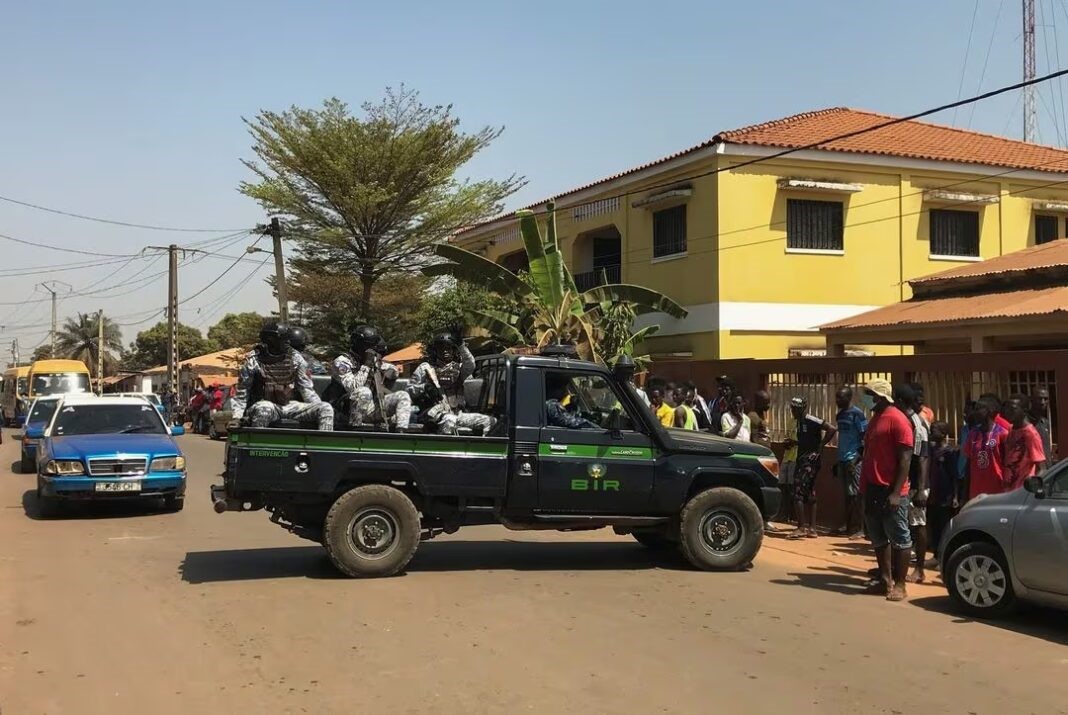
We follow with growing concern the events of Thursday, November 30, 2023, when some National Guard officers stormed police cells to free Finance Minister Souleiman Seidi and Treasury Secretary António Monteiro. Both, members of the opposition PAIGC party, were detained after being questioned in parliament about the alleged improper withdrawal of $10 million from the state treasury.
We find this development, which resulted in two days of sporadic shootings, including skirmishes near the presidential palace, in an attempt to subvert the government, extremely worrying. At least two people died in the process, according to reports.
We also note with disappointment that the suspected attempt to overthrow the government led to the dissolution of Parliament by the Head of State. Having only been elected last June, the premature dissolution of the opposition-dominated parliament could upset Guinea-Bissau’s already delicate democratic stability. Only one elected president has completed a full term since independence in 1974.
Against the backdrop of the failed coup in February last year and Guinea-Bissau’s struggle over the years to establish democratic stability, the MFWA considers the recent military adventure ill-conceived and unacceptable.
It is reassuring that calm has returned to Bissau since Monday, December 4, following the arrest of the alleged leaders. However, we urge the authorities to follow due process and ensure that the suspects’ rights are not violated.
The ECOWAS region has seen six military takeovers in the last three years; two in Burkina Faso and Mali, one in Guinea and the most recent being the July 26, 2023 coup in Niger.
Invariably, the media and civic space are among the biggest victims of these coups. Several media outlets, especially foreign channels and their correspondents, have been suspended or banned in Mali, Niger and Burkina Faso. On May 3, 2023, for example, the MFWA and 29 other organizations around the world sent an open letter to various UN bodies, the African Union and ECOWAS leaders, calling for an improvement in the protection of journalists and the promotion of freedom of expression in Burkina Faso and Mali.
We therefore urge all progressive forces in Guinea-Bissau to defend democracy in order to protect basic human rights, including freedom of the press and freedom of expression in the country. In this sense, we urge the government and the opposition to avoid any acts that could restrict civic space or undermine the independence of the media and the safety of journalists.
To this end, we call on all parties not to interfere in the work of the state broadcaster. For example, on December 4, a group of armed men went to the national radio and television stations and ordered all the workers to leave while the stations played only music. But in order to play music, the stations needed some technicians on duty, which the soldiers refused, and so the broadcasts were switched off for almost the entire day. We are also reliably informed that the Director of National Radio, Baio Danso, was summarily dismissed and replaced by Mama Saliu Sane, the former director who was removed after the opposition won the legislative elections in June 2023. This kind of chess game with the leadership of the national radio is regrettable and counterproductive, as the sudden changes distract it from effectively fulfilling its mandate as a broadcaster in the public interest.
We reiterate our call to all political actors in Guinea-Bissau to commit to protecting the country’s fledgling democracy as the basis for a united, peaceful and prosperous nation. We also urge the media to navigate this delicate phase of Guinea-Bissau’s political life with the necessary tact, maturity and sensitivity to promote cohesion and reconciliation.