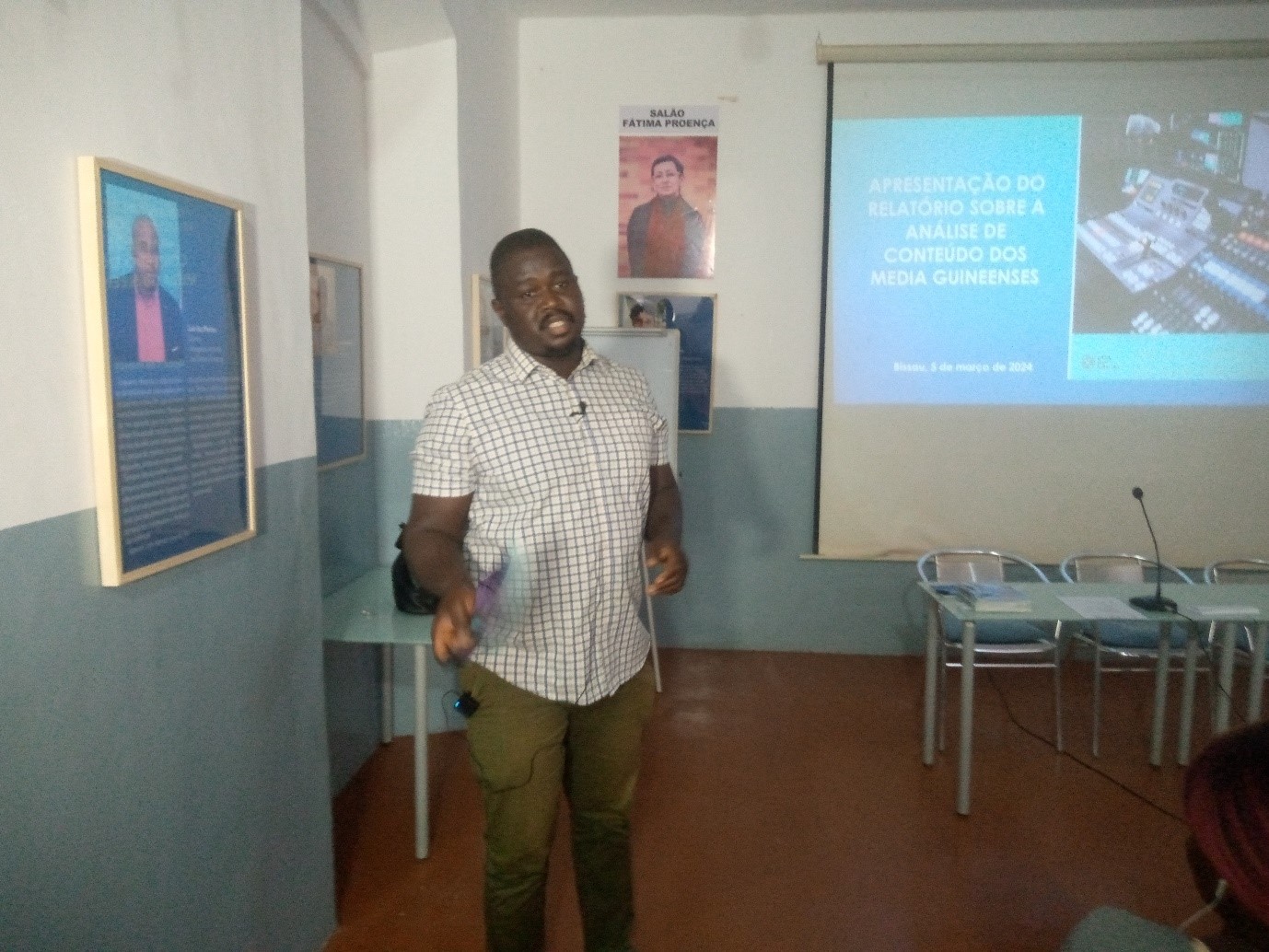
On March 5, 2024, the report on the monitoring of content produced by Guinean media outlets with regard to hate speech and the gender equality perspective was presented. The monitoring work involved three university students from the media field
For 30 days, 17 media outlets were monitored, including radio, newspapers, television and digital media. It was concluded that 91% of the ethical violations took place on the radio channel, through the presenters of the program.
The author concludes that in the news content of the different media it is clear that hate speech is gaining greater proportions, especially among political authorities. The report’s conclusions also underlined that ethical violations prevail in the media space, and the results confirmed non-compliance with the journalistic principles of decency, accuracy and public sensitivity.
Regarding the frequency with which women participate in the content produced by the media in Guinea-Bissau, the author assured that the presence or prominence of women in the media content monitored during the thirty days of the study was notable.
Recommendations
To presenters and editors: the recommendations focus on the duty to establish the principle of zero tolerance for unethical content or statements.
Regarding media owners: they are encouraged to set a high standard of respect for ethical principles.
To the international community: there was talk of the need to support more training for journalists.
To journalistic stakeholders: the author mentioned the need to coordinate the efforts of media stakeholders defending the interests of the profession, such as SINJOTECS, the Order of Journalists of Guinea-Bissau, AMPROCS and RENARC, to ensure that their members respect the ethical principles that guide the profession.
To the media regulatory authorities in Guinea-Bissau: the need to regulate the content of the national media is recommended, as well as the application of mechanisms that can suppress disrespect for ethical principles on the part of the media.
The afternoons of the 5th and 6th were reserved for the practical part, where Mozambican journalist and consultant Zinaida Machado led a workshop on human rights.