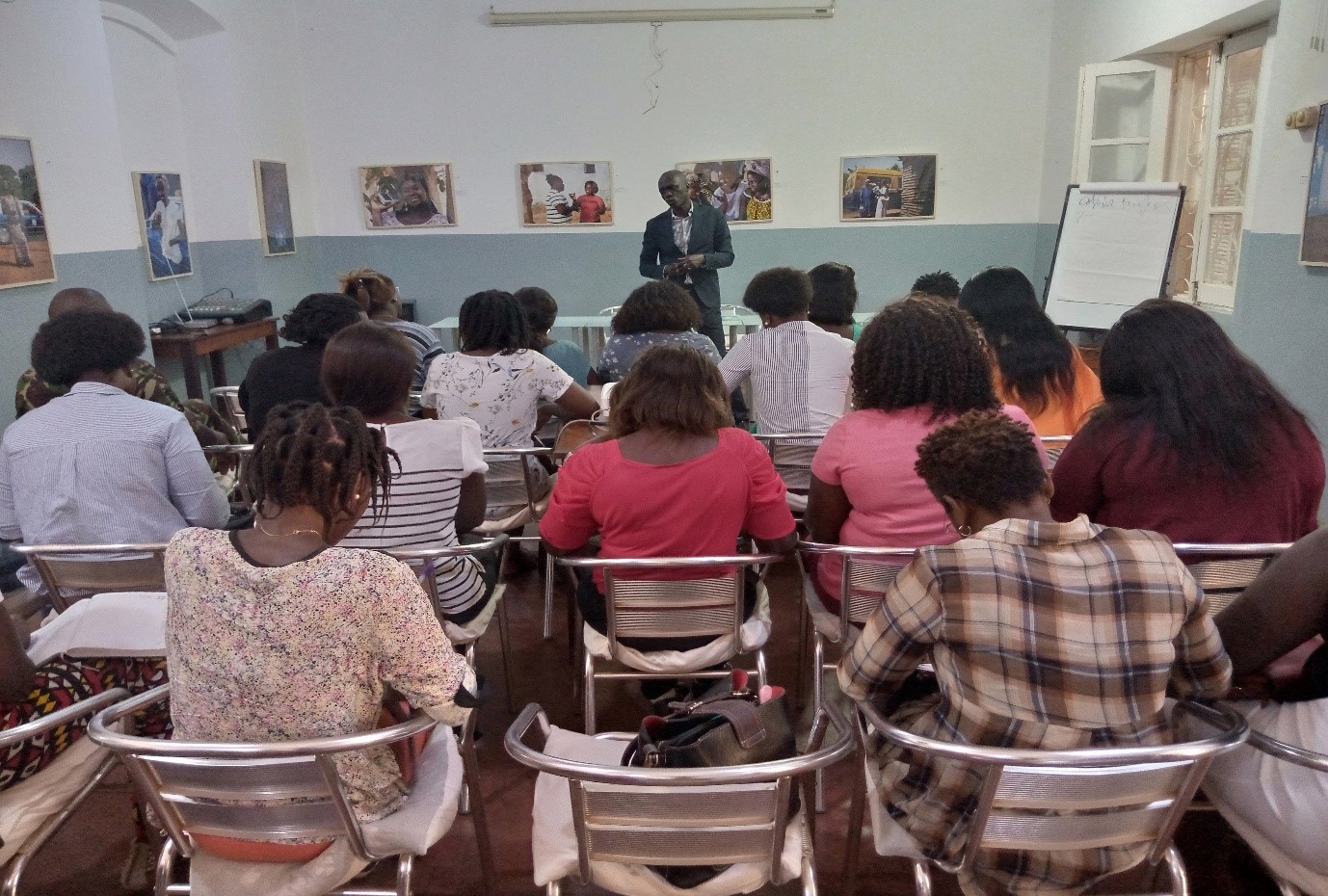
From December 12 to 13, 2022, AMPROCS, as part of the human rights fortnight, held a training session on “Freedom of the Press and Expression” in the field of human rights, aimed at 27 women and 3 men from different media organizations in the capital.
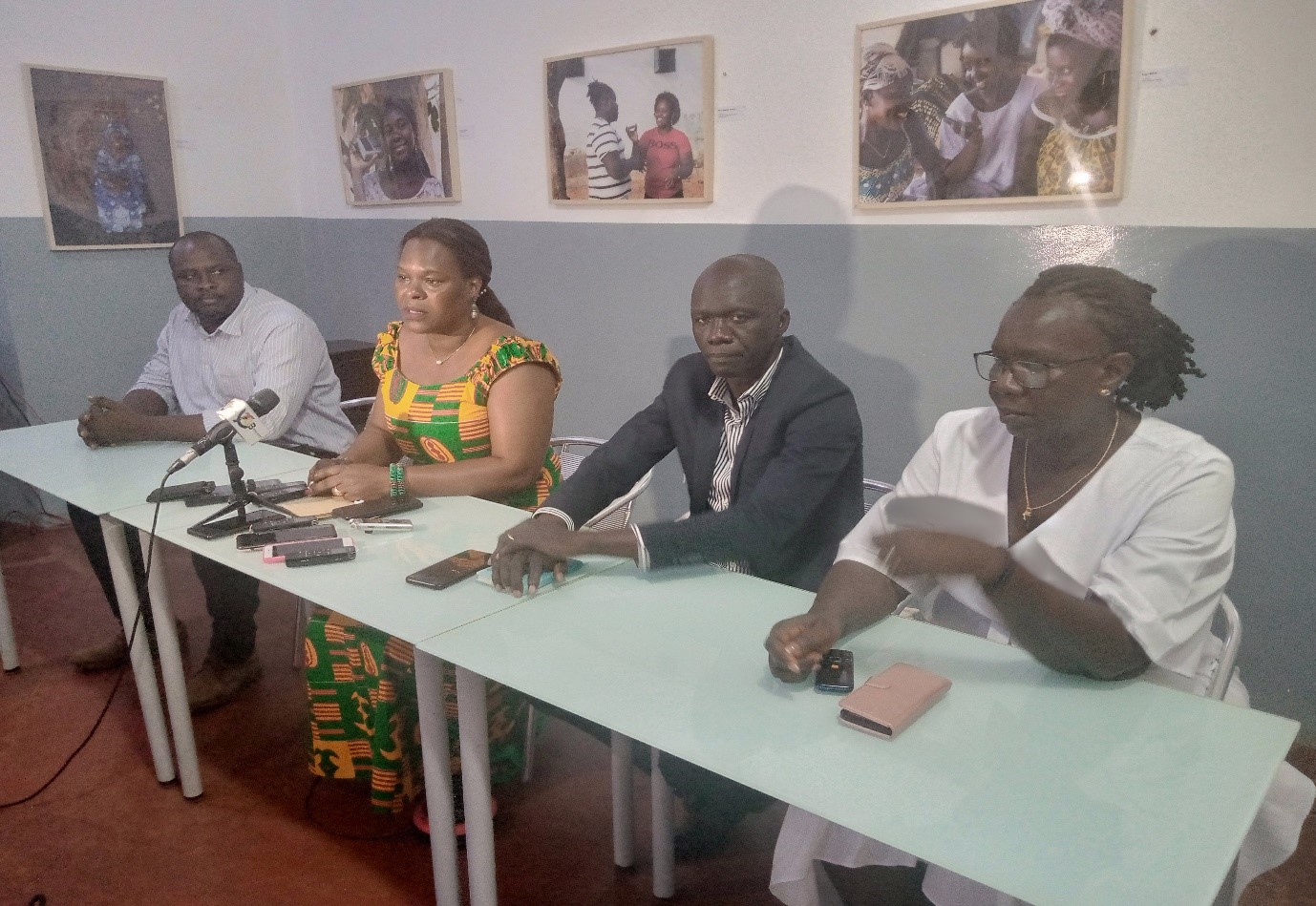
From left to right: Gueri Lopes (LGDH); Fátima Tchuma Camará (Vice-President of AMPROCS); Bubacar Turé (LGDH) and Paula de Melo (President of AMPROCS)
The training session was opened by the vice-president of AMPROCS, Fátima Tchuma Camará, who advised the trainees to make the most of the content being taught by Bubacar Turé, a human rights expert.
In this training, Bubacar Turé shared with the trainees his experience of the concept of human rights, highlighting the categories of civil and political rights and economic, social and cultural rights.
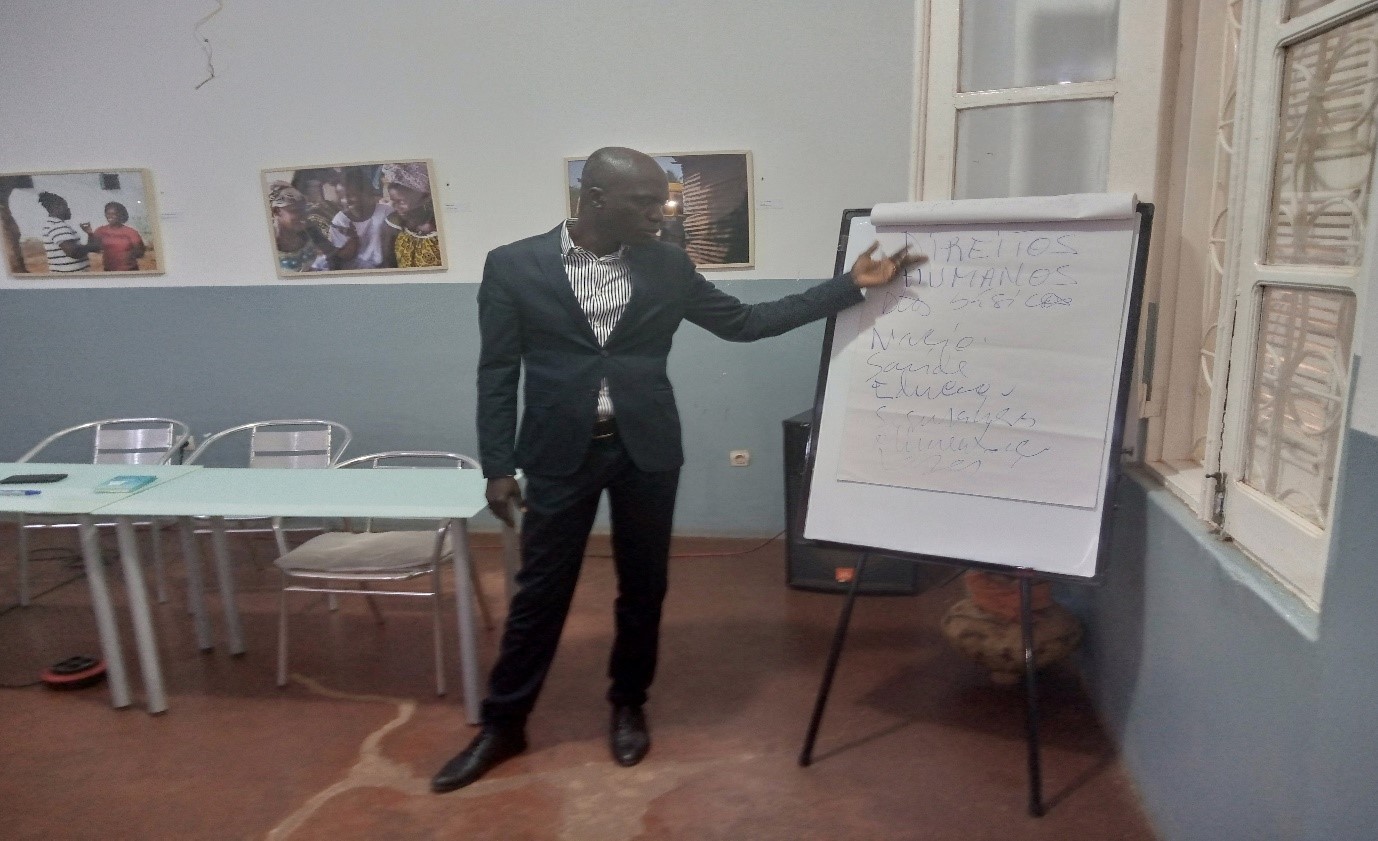
Bubacar Turé (LGDH) explaining the concepts of human rights
He went even further by showing journalists the difference between the category of civil and political rights (also known as rights, freedoms and guarantees) and economic, social and cultural rights. For him, the first category, i.e. the category of civil and political rights, requires profound abstention by the state in the exercise of rights, freedoms and guarantees, while the second category (economic, social and cultural rights) requires positive action by the state to satisfy citizens’ basic needs.
After introducing the concept mentioned above, four working groups were set up to work on the following topics:
- Identification of the 5 most violated rights in Guinea-Bissau;
- The role of the press in promoting and protecting human rights.
When identifying the 5 most violated rights in Guinea-Bissau, the groups were almost unanimous in pointing to the Right to Education, Health, Freedom of the Press and Expression, Physical and Moral Integrity and the Right to Demonstrate.
In relation to the theme “The role of the press in promoting and protecting human rights”, some points were listed that should serve as the role of the press:
- To educate and inform the public, in a coherent way, about their rights and duties;
- Disseminate human rights laws;
- Collaborate in denouncing actions that violate human rights;
- Ban information that could jeopardize social peace;
- Self-censor speeches that encourage hatred and ethnic-religious division;
- Creation of educational programs to discourage human rights violations.
On the second day, the trainer addressed the topic of human rights journalism, which is journalism that focuses on the daily lives of citizens, especially in communities. However, in his speech he urged journalists to emphasize their own agenda in order to free themselves from political ties.