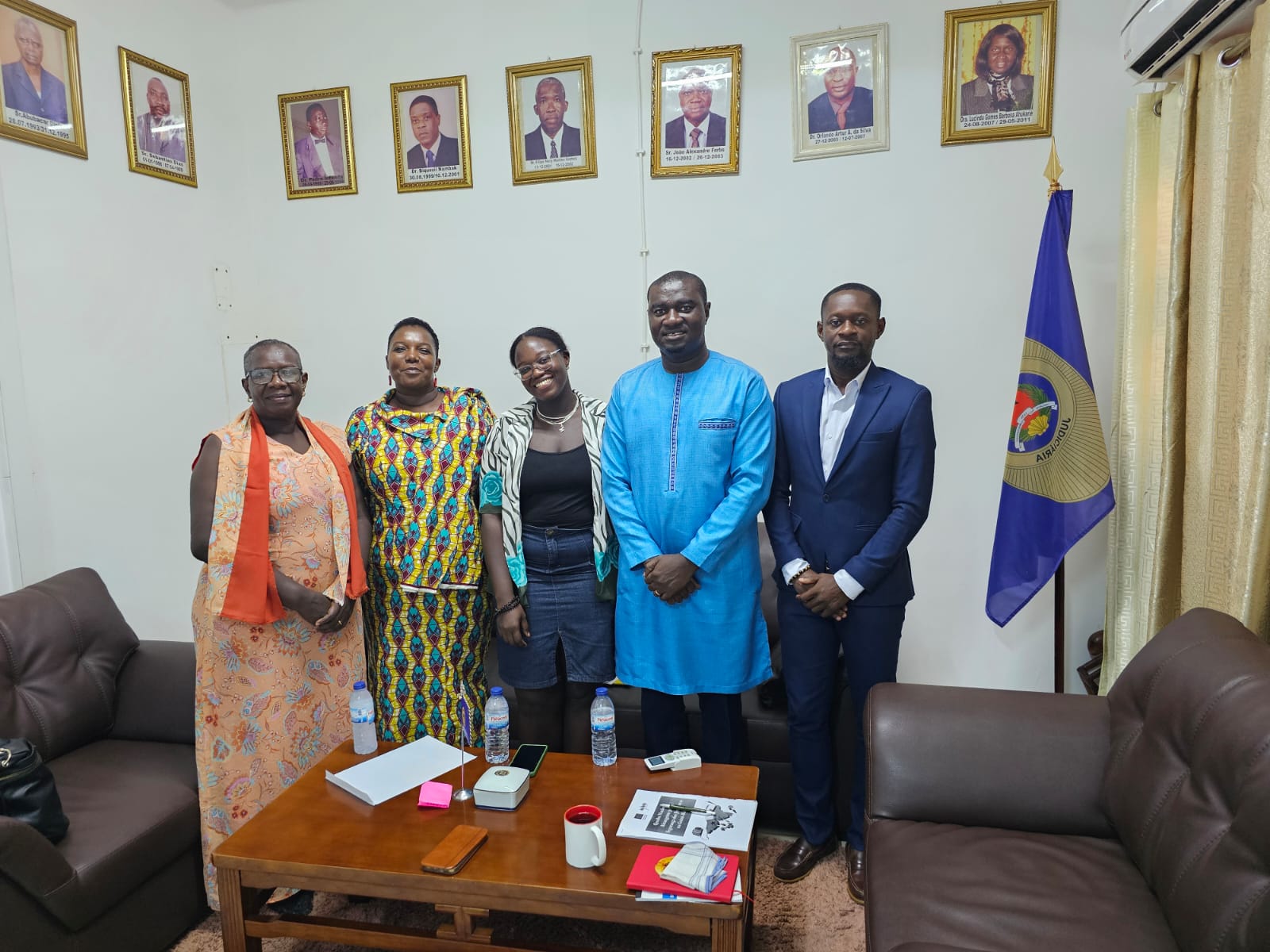
As part of efforts to promote press freedom and access to information in Guinea-Bissau and also to strengthen the partnership between the media and the country’s main state actors, representatives of media actors met with the National Director of the Judicial Police, Mr. Domingo Monteiro Correia, on April 11, 2024.
This commitment aims to strengthen collaboration between the two institutions in the implementation of the Comprehensive National Framework for the Safety of Journalists in Guinea-Bissau, of which your unit was part of the development process.
The team led by Paula Silva de Melo, President of the Association of Women Media Professionals(Amprocs- GB), one of the media actors in Guinea-Bissau, with Diamantino Lopes, Secretary General of the Union of Journalists and Media Technicians (SINJOTECS), Daisy Prempeh, Project Coordinator, and Miliza Djata, Project Assistant, congratulated Mr. Domingos Monteiro Correia on his recent appointment as National Director of the Judicial Police. She also presented the Media Foundation for West Africa’s (MFWA) Media Support Project entitled “Promoting Media Freedom and Access to Quality Information in Guinea-Bissau”which is being implemented with the financial support of the European Union in Guinea-Bissau.
The beneficiaries of this initiative are four (4) selected media actors – Sindicato dos Jornalistas e Técnicos de Comunicação Social da Guiné-Bissau (SINJOTECS), Ordem dos Jornalistas da Guiné-Bissau OJGB, RENARC-Rede Nacional Das Radios e Televisoes Comunitarias and Associação das Mulheres Profissionais da Comunicação Social (AMPROCS) – and the following key state actors – the Police, the Armed Forces, the National Regulatory Authority – ARN, the National Media Council of Guinea-Bissau(CNCS), the Ministry of Social Communication (MCS), the National Human Rights Commission – CNDH Guinea-Bissau and the Judiciary.
Among the main achievements of the project are: the strengthening of the capacity of media actors to monitor and document violations of press freedom and freedom of expression rights, including digital rights; the development of institutional policy documents (strategic, personnel and human resources, communication and fundraising plans) for media actors; the development of a common website for media actors; enhancing the capacity of key state actors on freedom of expression, human rights and media issues to promote and protect press freedom; enhancing the capacity of journalists and media organizations to produce quality, fact-based and ethical content to counter extremist radicalization; strengthening the capacity of media actors to monitor and report ethical violations in the media; and fostering partnership between local media and state actors through the development of a Comprehensive National Framework for the Safety of Journalists in Guinea-Bissau.
Mr. Monteiro Correia expressed his gratitude for the opportunity to discuss such important issues for the safety of journalists in the country. He recognized the fundamental role of journalists and the media, highlighting their importance in investigative journalism and in disseminating crucial information to society. The Director also emphasized that collaboration with journalists is often essential to the work of the Judicial Police, especially in cases where a lack of reporting could hinder investigations. He mentioned that, thanks to the efforts of journalists who have reported on certain problems, his unit is able to launch investigations into cases related to drugs, corruption and trafficking, emphasizing the importance of journalistic reports as catalysts for investigative work.
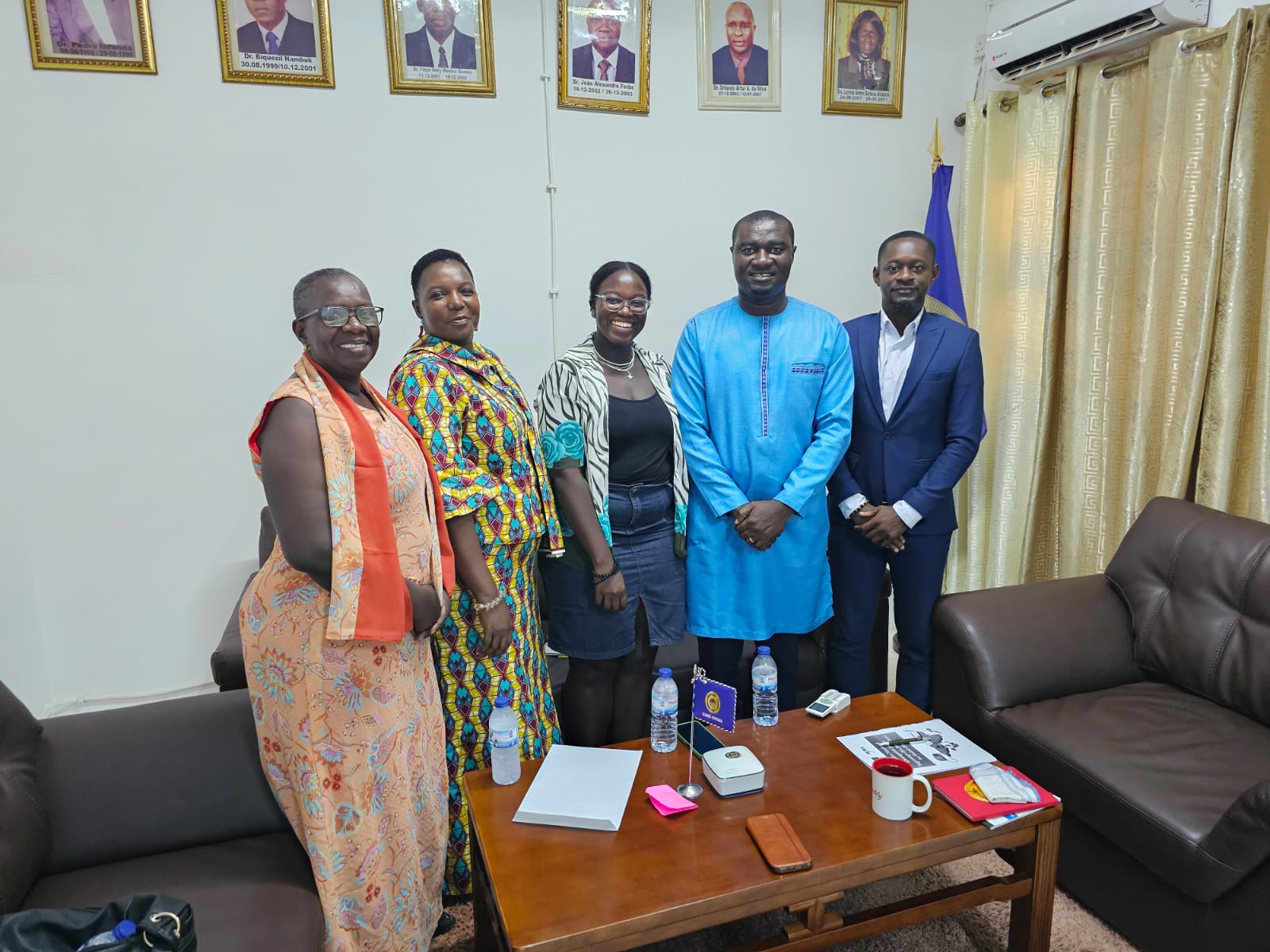
Paula de Melo President, AMPROCS, Daisy Prempeh, Miliza Djata, Diamantino Lopes, Project Team meet with Mr. Domingos Monteiro Correia, National Director of the Judiciary Police
The meeting was productive and resulted in a firm commitment from the Director and the Judicial Police to support the safety of journalists in Guinea-Bissau. “The inclusion of the Comprehensive National Framework for the Safety of Journalists in police training is an important step towards ensuring the protection of these professionals and promoting press freedom in the country,” he said.