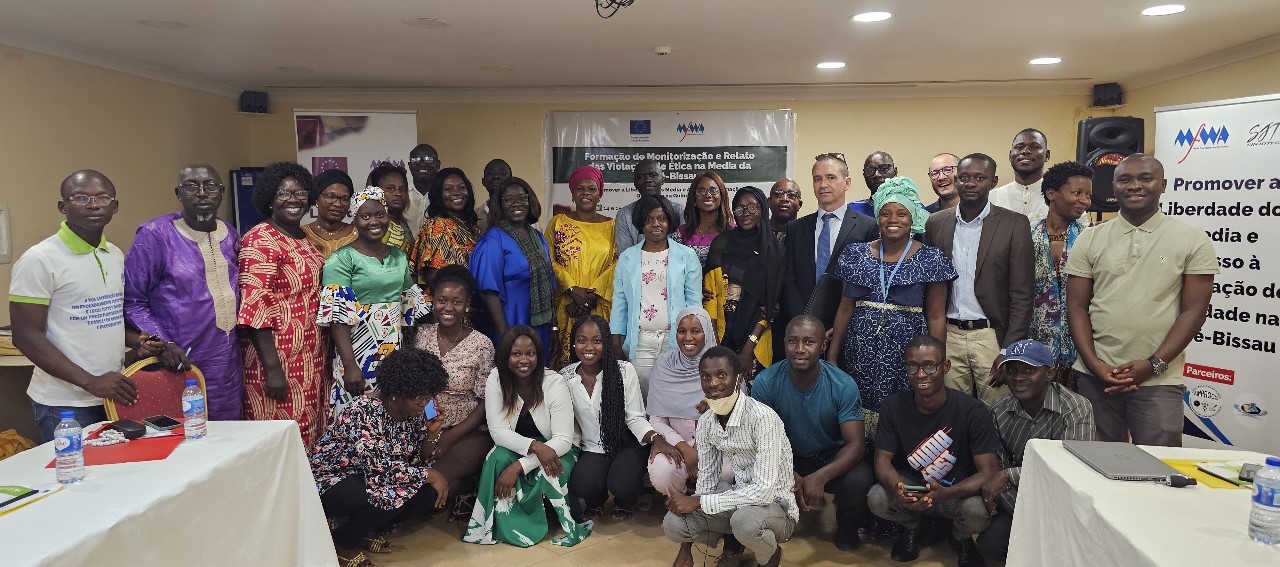
- A two-day training workshop convened by selected key media players in Guinea-Bissau to train journalists to practice ethical, transparent and accountable journalism ended with participants pledging to intensify the instillation of ethics in media work.
The trainings, which were organized by the Union of Journalists and Media Technicians (SINJOTECS), the Organization of Journalists of Guinea-Bissau (OJGB), the Association of Women Media Professionals (AMPROCS) and the National Network of Community Radios and Televisions (RENARC), in collaboration with the Media Foundation for West Africa (MFWA), were under the motto “Training in Monitoring and Reporting Ethical Violations in the Media in Guinea-Bissau”.
The event took place on March 14 and 15, 2024, at the Malaika Hotel in Bissau.
This initiative, which is part of the program “Promoting Media Freedom and Access to Quality Information in Guinea-Bissau” which is being implemented with financial support from the European Union, benefited more than 20 media professionals. The main objective was to train participants to monitor and report ethical violations in the country’s media, and to report them on a quarterly basis.
Opening Ceremony
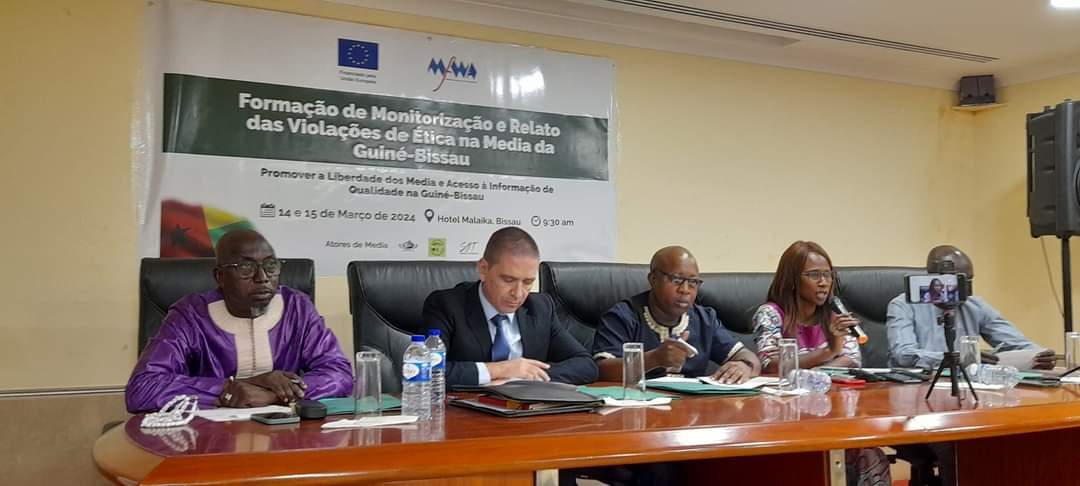
Dignitaries in Guinea Bissau Media Ethics Training and Monitoring
The program brought together media players from all over Guinea-Bissau. In a welcoming speech, the Director General of the Ministry of Social Communication, Emerson Gomes, said that the training was very useful and timely in enabling media professionals to be ethical.
“The Ministry of Social Communication advocates continuing in-depth training in ethics for media professionals, with the aim of preventing incidents of unethical reporting. The aim is not only to deal with unethical incidents, but also to discuss the role of our press in building a democratic and legal state,” he added.
Other dignitaries present at the opening ceremony were Mr. Carlos Abaitua Zarza, who represented the Delegation of the European Union to Guinea-Bissau, Mr. Bubacar Turé, President of the Guinean League for Human Rights (LGDH), Mr. Domingos Meta Camara, Acting President of the National Council for Social Communication and Ms. Indira Correia Baldé, President of SINJOTECS and MFWA national partner.
“The Media plays a crucial role in democratic societies, providing information that is in the public interest,” emphasized Mr. Carlos Abaitua Zarza, adding: “Therefore, preserving the freedom to receive and transmit information without interference must remain a fundamental value.”
Training
The training sessions were conducted by Nuno Andrade Ferreira, an expert in the field. He was very practical and engaging. Throughout the two-day event, participants were instructed both theoretically and practically on ethical reporting. The training on the first day focused on the concepts of media ethics and the Code of Ethics for Journalists in Guinea-Bissau, with practical exercises designed to increase participants’ understanding of these principles and identify exemplary and problematic media content and practices.
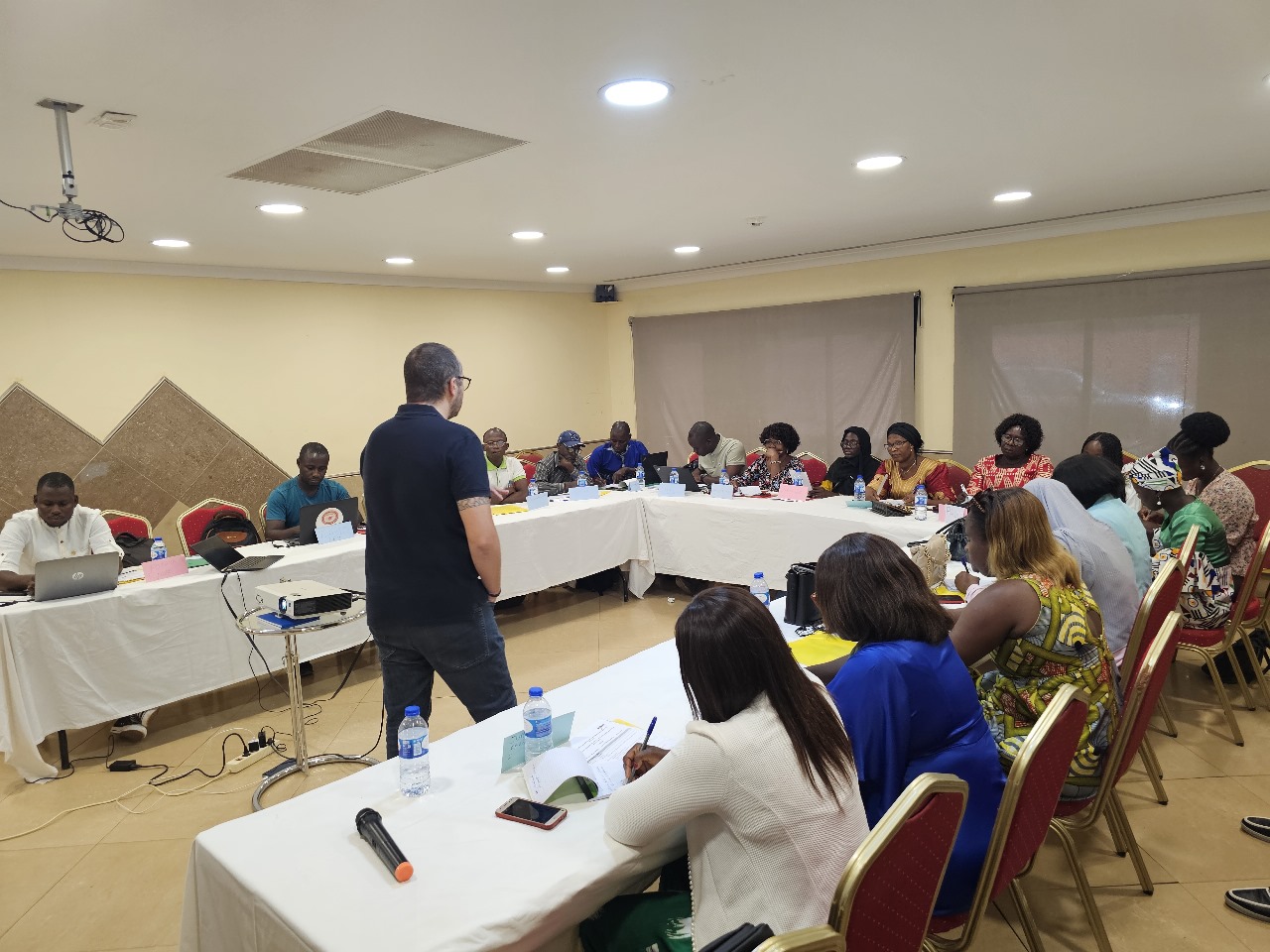
Trainer and participants in Concepts of Ethics
The second day focused on monitoring ethics violations, exploring monitoring strategies and using the Journalistic Ethics Monitoring Tool developed by the trainer to record violations.
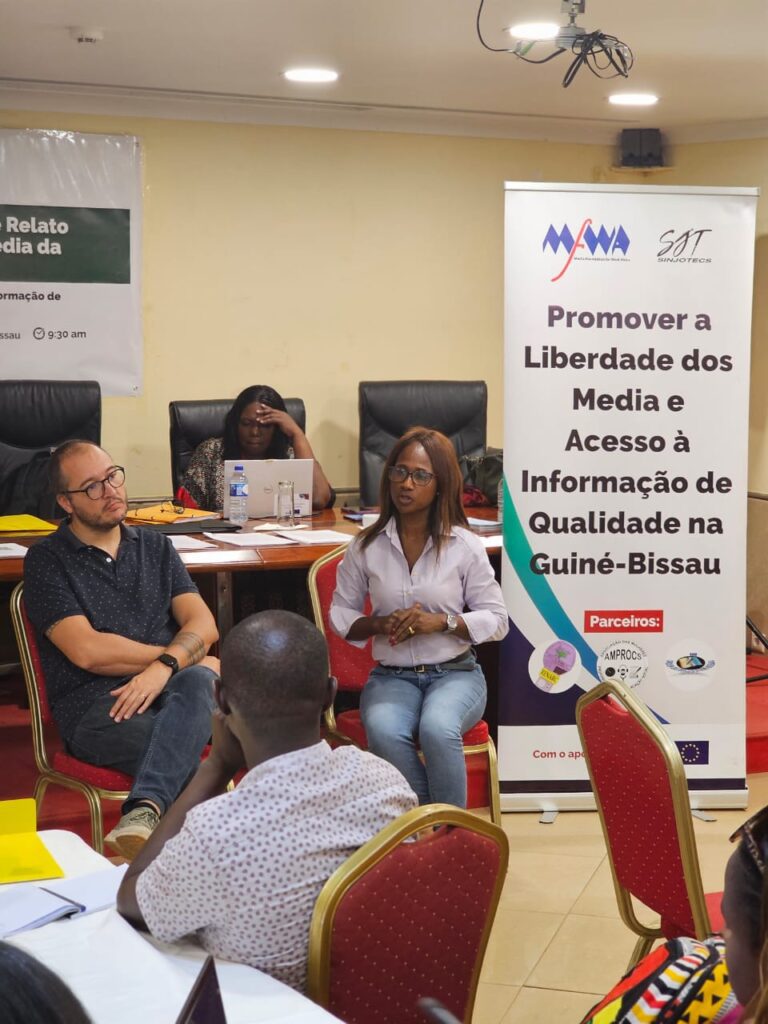
Trainer Nuno Andrade Ferreira and Indira Correia Balde President of SINJOTECS
“Maintaining ethical and deontological standards in journalism is not only about promoting pluralism, but also about recognizing the delicate balance between press freedom and citizens’ rights. This requires journalists to navigate the complexities of reporting while upholding the principles of the media,” said the President of the Guinean Human Rights League, Bubacar Turé.
Indira Correia Balde, President of SINJOTECS, guided the participants through the monitoring process, emphasizing the importance of vigilance in maintaining ethical standards in journalism.
Participant intervention
The participants demonstrated their commitment to applying the knowledge they had acquired in their professional activities, recognizing ethics as an indispensable tool for guaranteeing credibility and public trust in the press.
“This isn’t just about learning values; it’s about honing our professional skills to deliver impactful messages to the public every day,” said Fatumata Binta Candé, Director of Radio Mulher de Bafatá.
Similarly, Aguinaldo Ampa, Director of Radio Jovem, said that “Even without formal training, ethics should be our guiding principle [as media professionals]. This training workshop served as a powerful reminder that ethics is the backbone of effective communication. Without it, our content lacks integrity.”
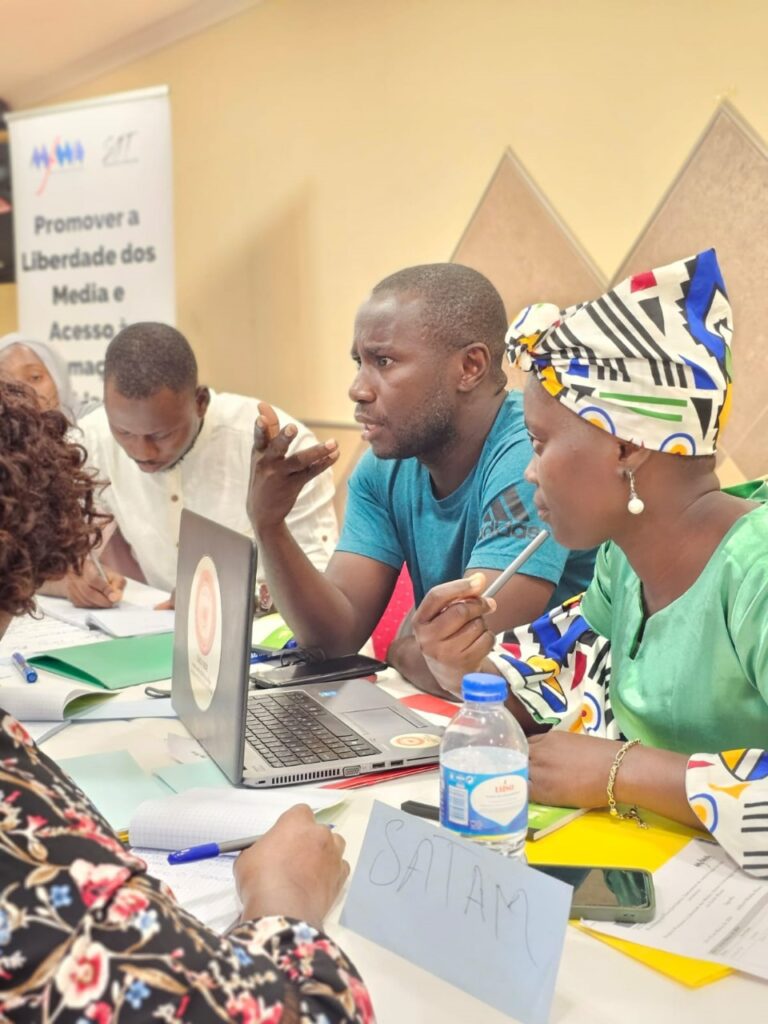
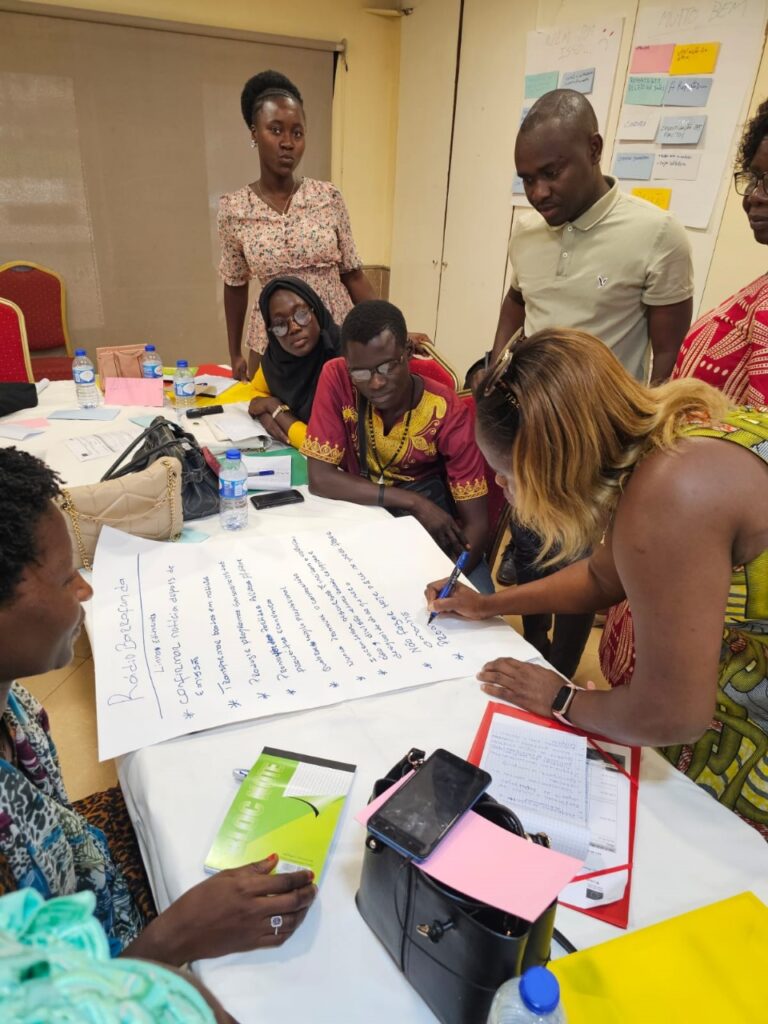
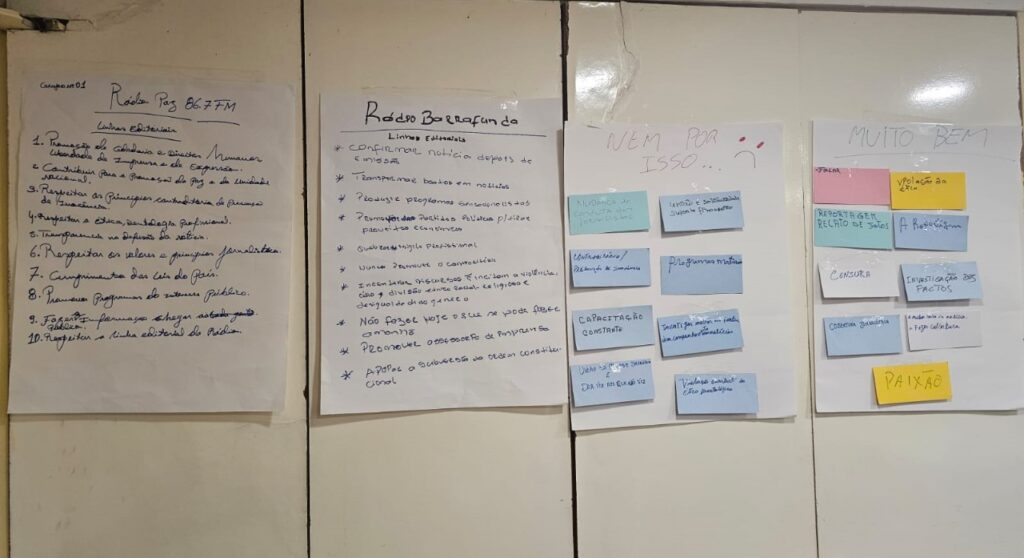
Practical Exercise on Good and Bad Writing