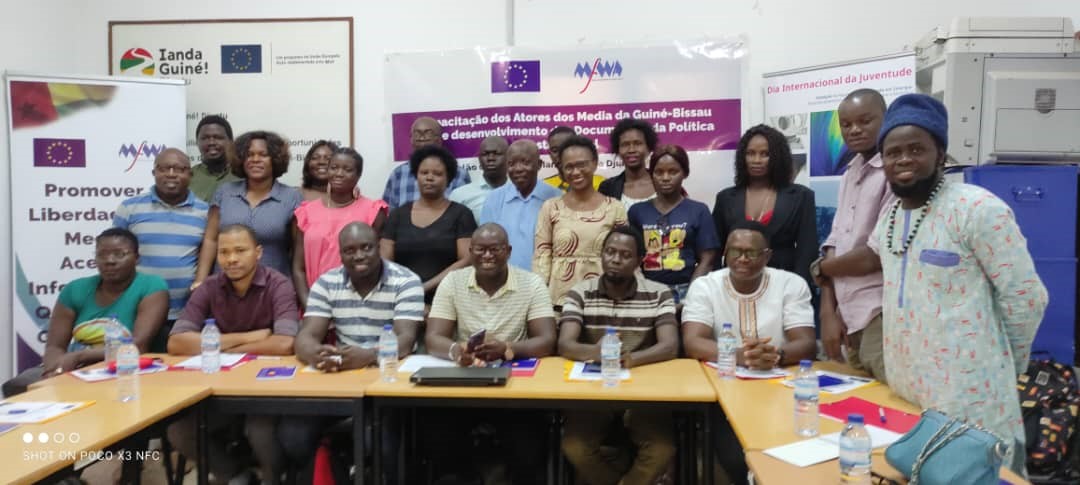
The Media Foundation for West Africa provided a two-day training on institutional policy documents (strategic plan, communication and fundraising plan, and personnel and human resources planning) to 20 leaders of the four main Media Actors in Guinea-Bissau: the Union of Journalists and Media Technicians (SINJOTECS), the National Network of Community Radios (RENARC), the Association of Women Media Professionals (AMPROCS) and the Order of Journalists of Guinea-Bissau (OJGB). The capacity-building workshop took place at Ianda Guinea Djuntu in Bissau on November 15 and 16, 2022, with financial support from the European Union. The initiative is part of the implementation of the project “Promoting Media Freedom and Access to Quality Information in Guinea-Bissau”.
The institutional policy documents provide action plans and guiding paths for the decisions of media stakeholders over the next three years (2023-2026). The plans set priorities, decide on pathways and determine key performance indicators for the work of media stakeholders with regard to their overall programming and operations.
The institutional policy documents were developed by a consultant, Dr. Gilbert Tietaah, taking into account the target media stakeholders, and considering the past and current context, informed by a formative assessment of the capacities and challenges of media stakeholders, with the aim of contributing to freedom, independence and professionalism in Guinea-Bissau. The process involved several iterations, through interviews and deliberate face-to-face meetings, as well as email correspondence and virtual meetings (Zoom) between the stakeholders and the consultant.
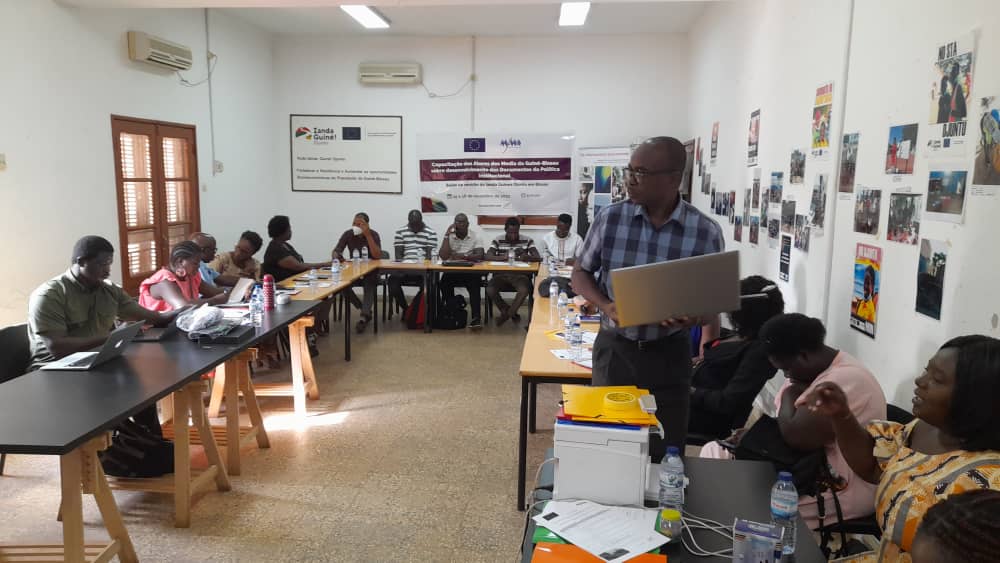
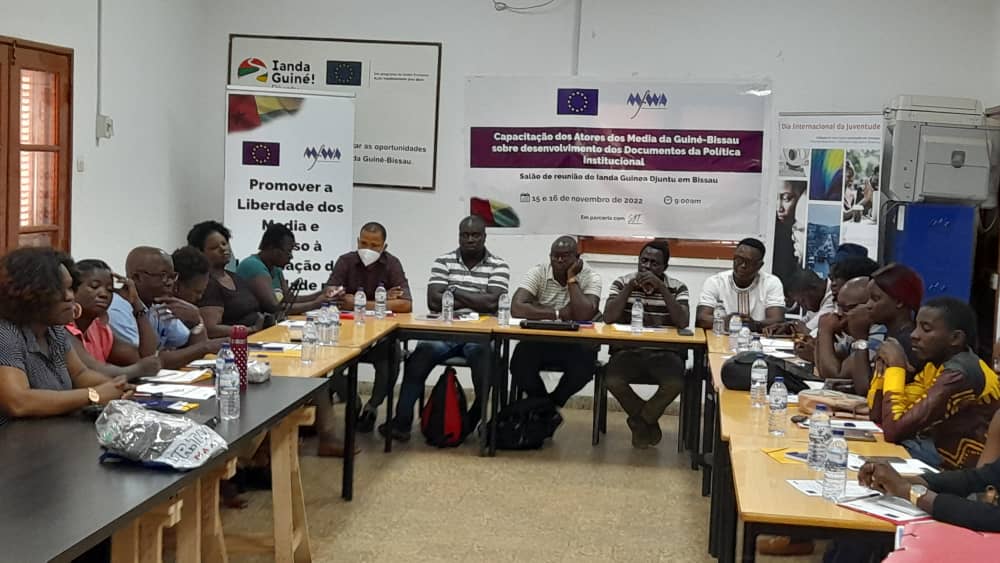
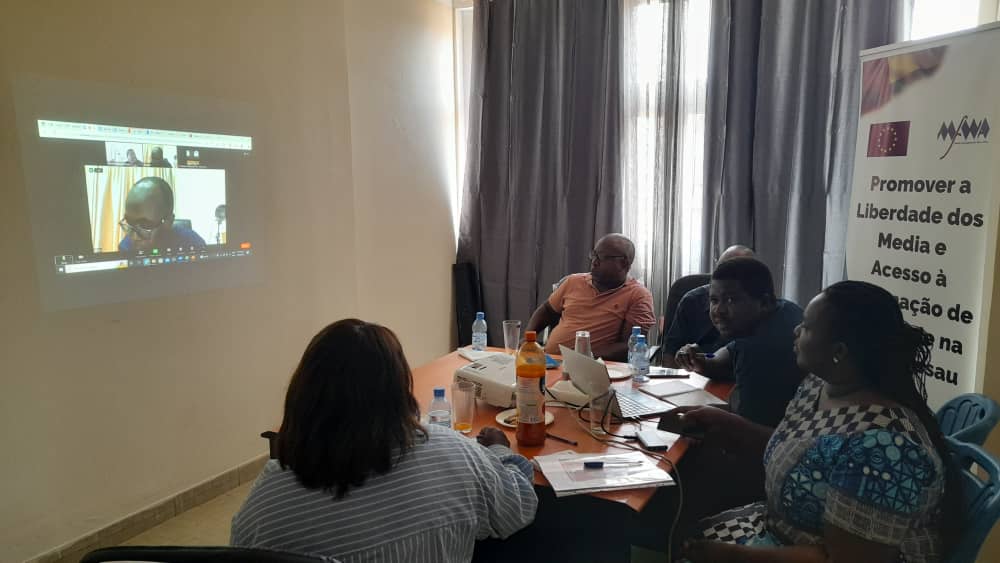
Dr. Gilbert Tietaah, Consultant with the participants during the training of the Institutional Policy documents
The first day consisted of a plenary session involving all the media stakeholder representatives, and on the second day, the media stakeholders split into groups to validate and finalize their institutional policy documents.