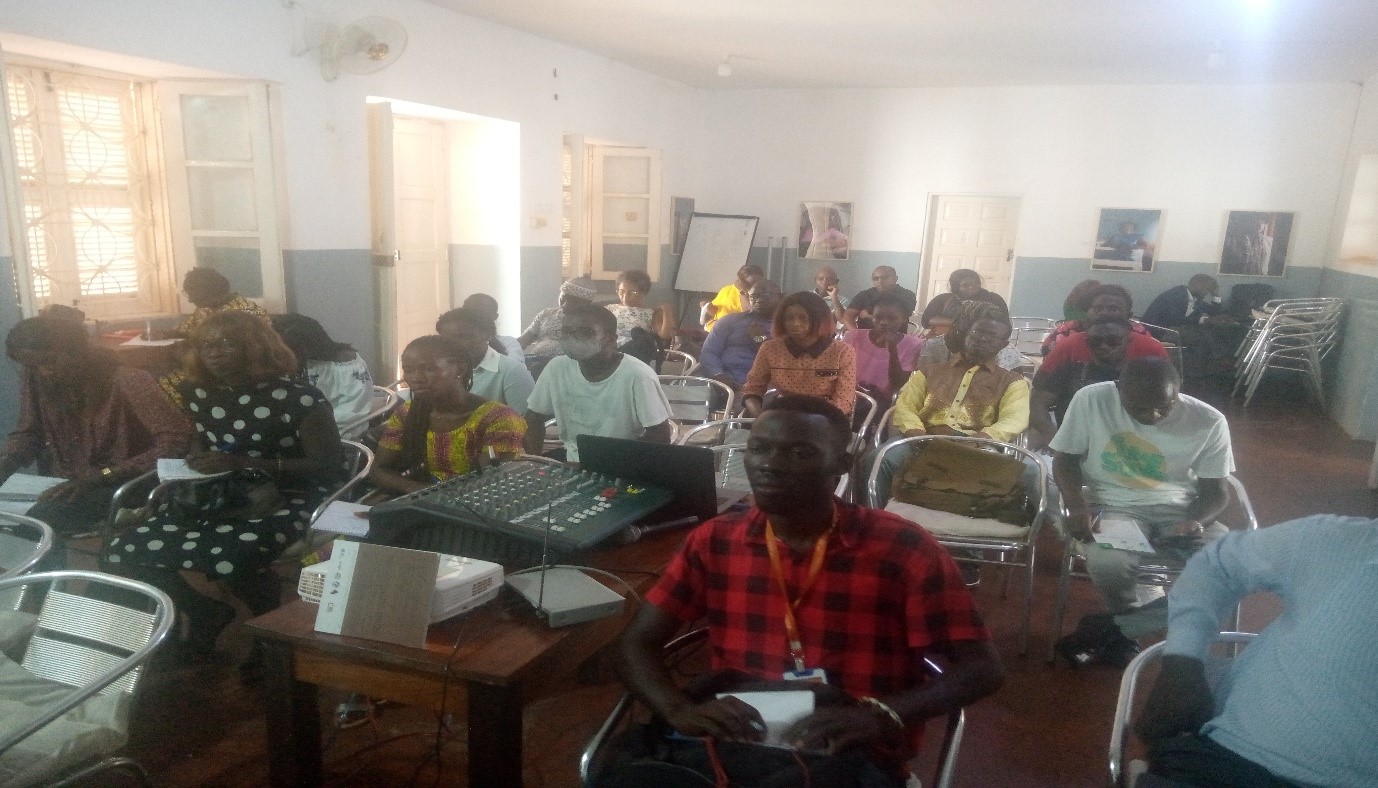
On July 5, 2023, the House of Rights hosted the presentation of the study report on “Conditions for women and men journalists in Guinea-Bissau”
Consisting of five chapters, the report aims to analyze the conditions of journalists in Guinea-Bissau and other media professionals. The study also looked at the issue of gender equality in the Guinean media sector, the economic situation of journalists, the relationship of media professionals with power, as well as the issue of journalists’ professional ethics and deontology, based on data from a survey of 100 Guinean journalists (70 of whom were women journalists).
The event was attended by journalists from public and private bodies, organizations that defend Guinean journalists and civil society organizations.
In this presentation of the report, the president of AMPROCS and the president of SINJOTECS spoke out against the plans for censorship, which continue to be a reality in the country, and the polarization of the media in defence of the political parties’ agenda.
Referring to the study’s data, the organizations defending the class criticized the way women in the press are relegated to middle positions
Representing the Guinean Human Rights League, Vitorino Indeque stressed the importance of the study and encouraged the organizations defending the class to continue the fight to reverse this dark scenario.
The Camões Institute, represented here, has always ensured that it collaborates with organizations that defend the journalistic profession in training professionals, but above all in defending press freedom and the safety of journalists.
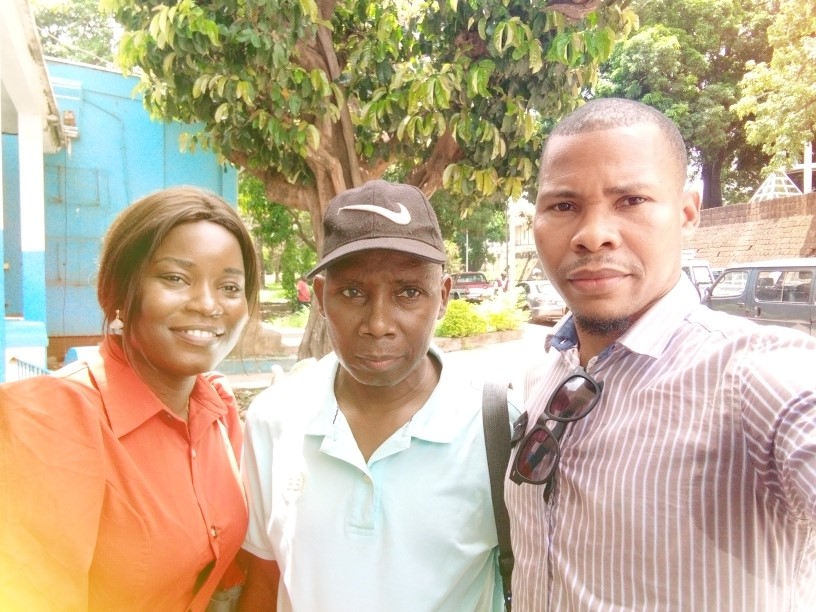
From left to right, participants in the event: Sérgia dos Santos, António Nhaga, and Baducaram Imbenque, gathered after the presentation of the report.
In the presentation of the report, the author revealed that, among other information in the report, the data confirmed that “Of the 100 journalists surveyed, 66 have no salaries, although they ‘sometimes’ benefit from small allowances. Of these, 45 are women journalists. The study also confirmed that the waves of insecurity continue to worry media professionals, as the situation of insecurity and fear in the press sector is taking on greater proportions.
The data also showed that from 2020 onwards, the country has recorded several cases of beatings and harassment of political analysts and activists, allegedly for being critical of the regime in place. However, the data also showed that some professionals continue to make unbridled use of the news media to offend, denigrate the image of others and provide unacknowledged services. With regard to the lack of objectivity, the author explains that this is due, on the one hand, to a lack of training and, on the other, to a lack of ethics and independence on the part of communication professionals.
In view of the results of the study, the author concludes that the situation of journalists in Guinea-Bissau is extremely precarious and that their work is profoundly affected by various vicissitudes, namely: 1. Lack of autonomy and financial security for journalists; 2.Threats to freedom of the press and freedom of expression; 3. Violation of the physical and moral integrity of Guinea-Bissau’s press professionals; 4. Existence of censorship and self-censorship, especially in public bodies; 5. Polarization (division) of the journalistic class; 6. Lack of objectivity and neutrality in the treatment of information.
In order to deal with these problems affecting the Guinean press and its professionals, the author of the report says that it is necessary for the political authorities, international partners and the journalistic profession itself to take into account some recommendations, namely: 1. That the State of Guinea-Bissau ensures the creation of an economic subsidy (without any conditions that jeopardize the journalistic profession) to the press for the public service provided, in order to guarantee financial autonomy; 2.That the national authorities do not interfere in the work of journalists; 3. That the State of Guinea-Bissau creates security conditions so that journalists feel safe in the exercise of their profession; 4. That the State of Guinea-Bissau endows the Guinea-Bissau National Media Council (CNC) with coercive powers, capable of reorganizing and regulating the activities of the press in Guinea-Bissau 5.That the state respects and enforces the principles of freedom of the press and expression set out in the Constitution of the Republic, the National Press Law and other international laws ratified by the state of Guinea-Bissau; 6.That mechanisms be created so that the Guinea-Bissau Journalists’ Association assumes its responsibility with regard to issuing journalists’ professional cards, with a view to organizing the class; 7. That journalists carry out their duty to inform objectively and neutrally, regardless of the political line of the owners or directors of the media; 8. That journalists, for ethical and moral reasons, stay away from political activism; 9.To international partners, to continue to support and invest in the training of Guinean journalists in order to ensure that they perform their duties more professionally; 10. To international partners, to further intensify their diplomatic influence, playing an advocacy role with the Republic’s responsible institutions in order to mitigate the constant violations of freedom of the press and expression, as well as attacks on media professionals and media organizations.
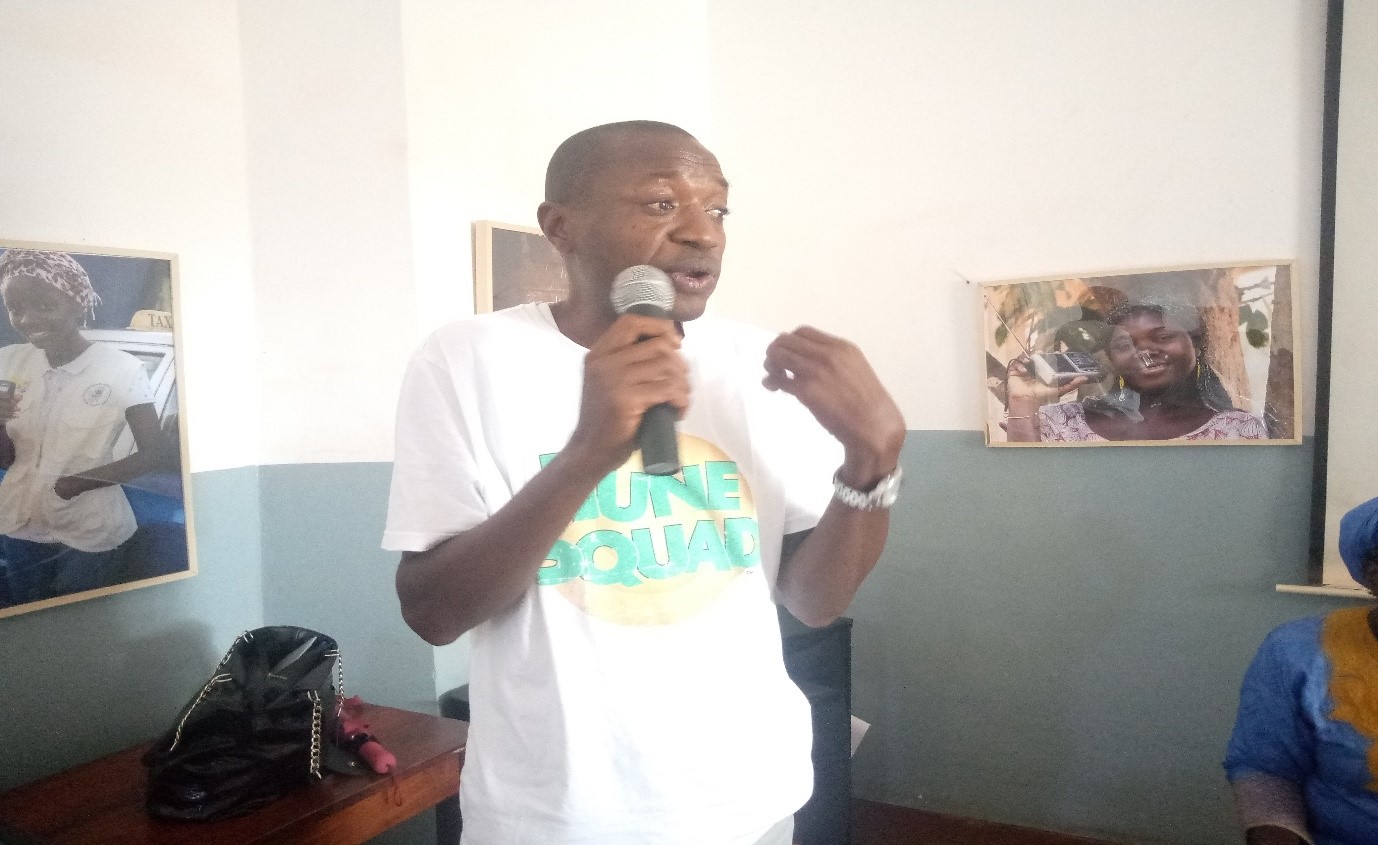
Clodé N’Tchama, a journalist, confirms and discusses the information in the report on the conditions of communication professionals in Guinea-Bissau.
In the debates, the journalists confirmed that the information contained in the report is a reality in the press sector and called on the authorities to create conditions so that professionals can carry out their tasks with greater independence.