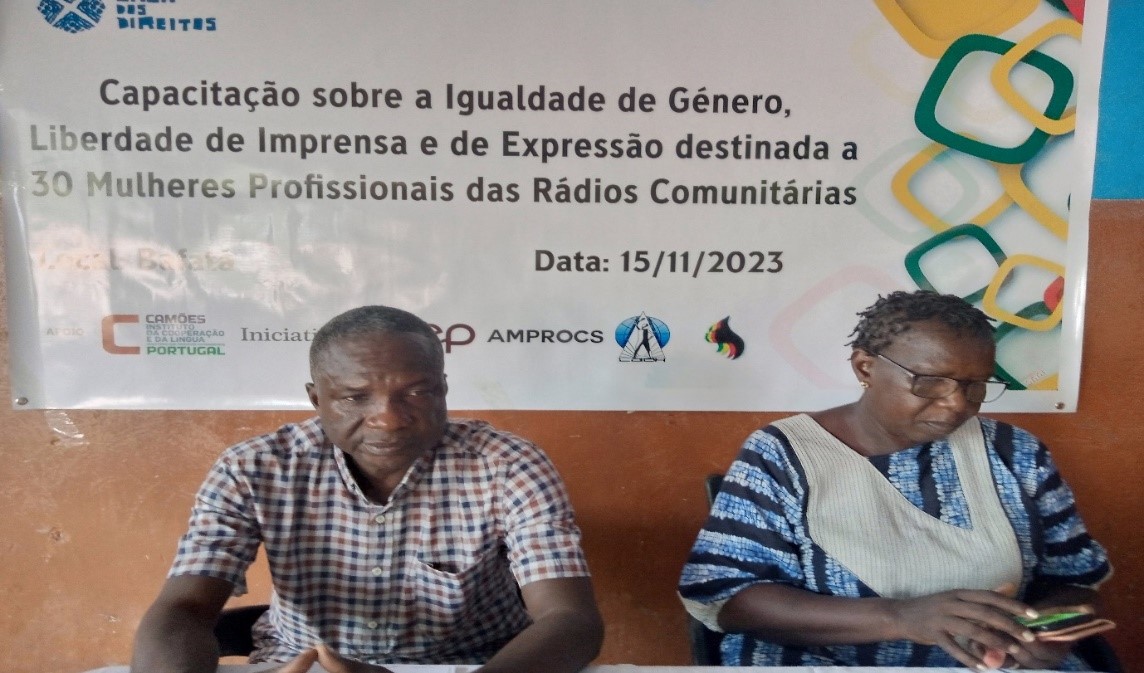
In Bafatá, on November 15, 2023, a training session on gender equality, freedom of the press and freedom of expression was held for 30 professionals from the country’s various community radio stations.
Opening speeches
In keeping with custom, the Association of Women Media Professionals invited the governor of the Bafatá region, Bubacar Djamanca, to preside over the opening of the training session, and in his speech he called on the trainees to fight as hard as they can to break the habits and customs that put women at a disadvantage.
As well as encouraging female participation in training and education, the governor said that men and women should have the same opportunities because what men can do, women are also endowed with the skills and abilities to do, so much so that for him women have to be at the forefront of the search for knowledge so that they can finally demand true equality, as enshrined in the Constitution of the Republic.
With regard to freedom of the press and freedom of expression, which are defended by the laws of the Republic and international conventions ratified by the government of Guinea-Bissau, the governor of Bafatá advised community radio professionals to respect professional ethics and deontology, which are the basic rules for the exercise of the journalistic profession, while avoiding the unbridled use of microphones, especially with the aim of undermining the honor and good image of others.
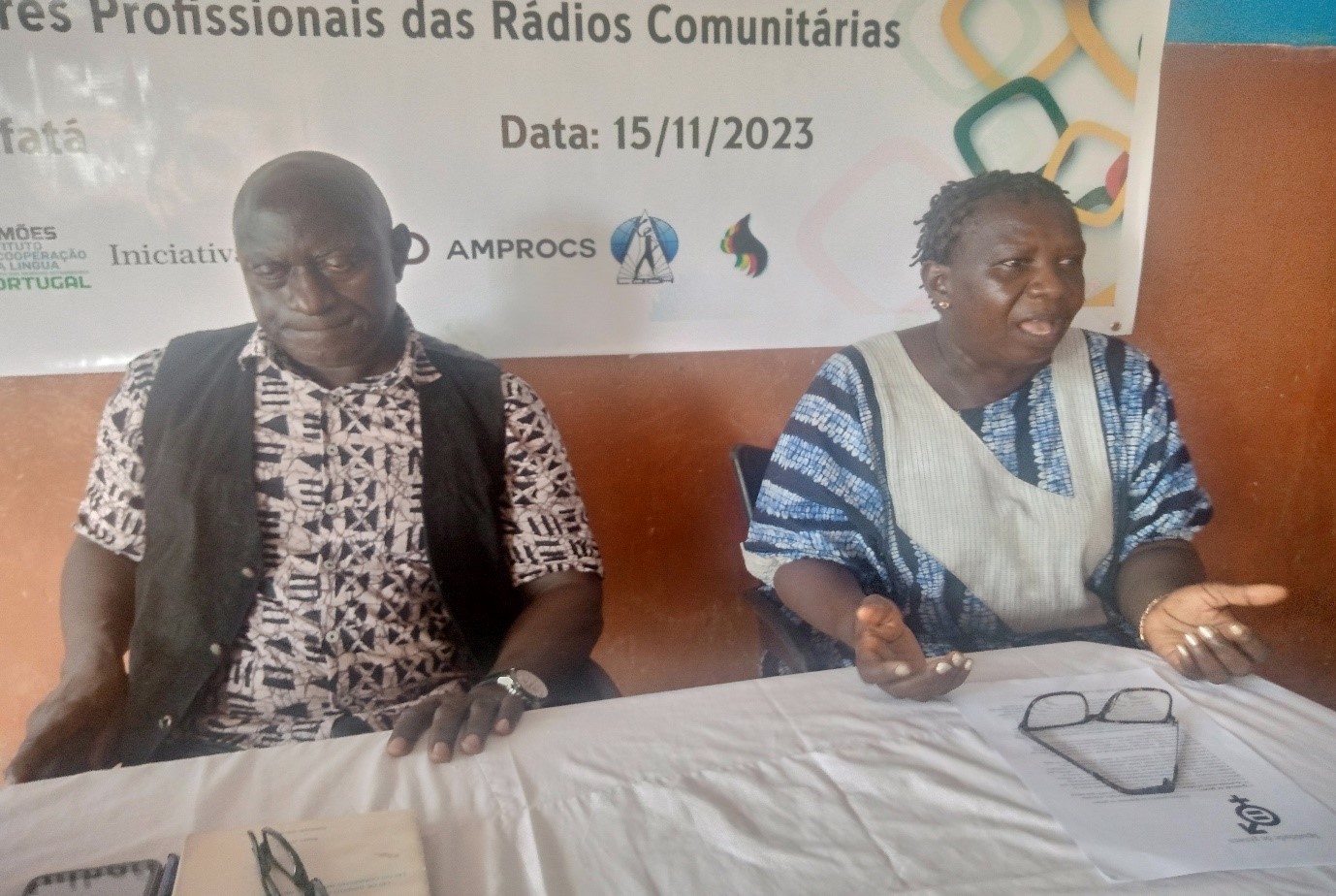
Paula de Melo, President of AMPROCS, highlighted the persistent discrimination that Guinean women face in almost every aspect of their professional lives
For her part, the president mentioned the issue of discrimination that continues to hang over Guinean women in almost every aspect of their professional lives, and she challenged journalists to fight hard to reverse this scenario that relegates women to middle decision-making positions.
On the subject of gender equality, the facilitator presented the content produced for the trainees, which dealt with different topics:
- Concept of Gender,
- Social Roles and Gender Stereotypes,
- Types of discrimination,
- Definitions of Gender by Different National and Transnational Institutions
- Mechanisms to Combat Inequality.
Talking about the concept of gender equality, the facilitator says that gender equality (also called equality between the sexes or sexual equality) is a concept that defines the search for equality between members of the two human genders, men and women. In short, it is equity between the genders, seeking to combat many forms of injustice and inequality that exist in the world. For him, such injustices and inequalities mainly affect women and girls, leading them to face discrimination and various forms of violence.
There is no coincidence between natural identity (sex) and gender identity (social construction), and the same is true of the notions of race, class, age and ethnicity. The opposite concept to gender equality is not gender difference, but gender inequality, since this presupposes hierarchical status, rights and dignity between men and women.
With regard to social roles and gender stereotypes, the facilitator explained that Gender Stereotypes – are the generalized and socially valued representations of what men and women should do (for example, “men are stronger”, “women don’t drive well”, “men have to be studs”, “women shouldn’t work outside”, “men have to support the household on their own”, “women have to look after the house on their own”, “women shouldn’t study civil engineering”, “men shouldn’t study nursing”, “boys shouldn’t cry”. For him, these tendencies are always emphasized by cultural issues, i.e. in many societies girls are taught to think that some professions are exclusively for men, when in fact it is a way of keeping women in the submissive situation they have always been victims of.
There were two types of discrimination, namely:
Direct discrimination – Norms or practices that directly produce unequal and unfavorable treatment of a person on the basis of their sex.
Indirect discrimination – An apparently neutral measure or practice that disproportionately disadvantages individuals of one of the sexes.
Talking about the issue of gender equality, the facilitator gave examples of the actions of some countries and international institutions:
For example Portugal, where the principle of Equality is laid down in the Constitution of the Republic, expressed in Article 13: “All citizens have the same social dignity and are equal before the law.”
Gender equality means giving equal visibility, power and participation to men and women in all spheres of private and/or public life (Guide to Self-Assessment of Gender Equality in Companies, 2008).
From the European Union, in the Action Program on the Equality of Girls and Boys in Education, defended in the Resolution of the Ministers of Education (1985), considering that educational establishments are a privileged place to carry out effective action on equal opportunities for girls and boys and that education should, from the outset, encourage the elimination of stereotypes.
Other measures listed to promote women’s participation include the possibility for the European Parliament to allow women’s time spent with children to be counted towards retirement and the provision of schools for children. Equal pay for equal work and a reduction in violence and trafficking in women would also contribute to the development of gender equality in social life.
The United Nations
he Universal Declaration of Human Rights adopted by the UN (1948) states that: “Everyone is entitled to the rights and freedoms set forth in this Declaration, without distinction of any kind, such as race, color, sex, language, religion, political or other opinion, national or social origin, fortune, birth or other status. Furthermore, no distinction shall be made on the basis of the political, legal or international status of the country or territory in which a person is born, whether that country or territory is independent, under trusteeship, autonomous or subject to any limitation of sovereignty.” Art. 2.
To close the first topic, the trainer spoke about the Convention on the Elimination of All Forms of Discrimination against Women (1979) CEDAW. This text states that States Parties shall take all appropriate measures to ensure the elimination of any stereotyped conceptions of the roles of men and women at all levels and in all forms of education, in particular by reviewing school textbooks and programs Art. 10.
Efforts to combat inequality
On this subject, facilitator Salvador Gomes addressed the issue of inequality between men and women, which is a historical factor in Western societies. Since ancient times, women have been treated as inferior to men, due to various religious beliefs that were used to justify this attitude, especially in Hebrew society, which was characterized by patriarchy and hierarchical social relations. This discrimination spread through the various social customs of patriarchal societies.
Unfortunately, there is still a lot of work to be done, because the long-awaited equality is far from being achieved. Women still suffer discrimination and violence simply for being women, women are still paid less for the same work as men, women still suffer sexual harassment at work, women still give up their careers to look after their children, women are still in the minority in sport/science/technology/leadership positions. In order to achieve equality, we need to debate the issue more and more, starting at home with the education of boys and girls.
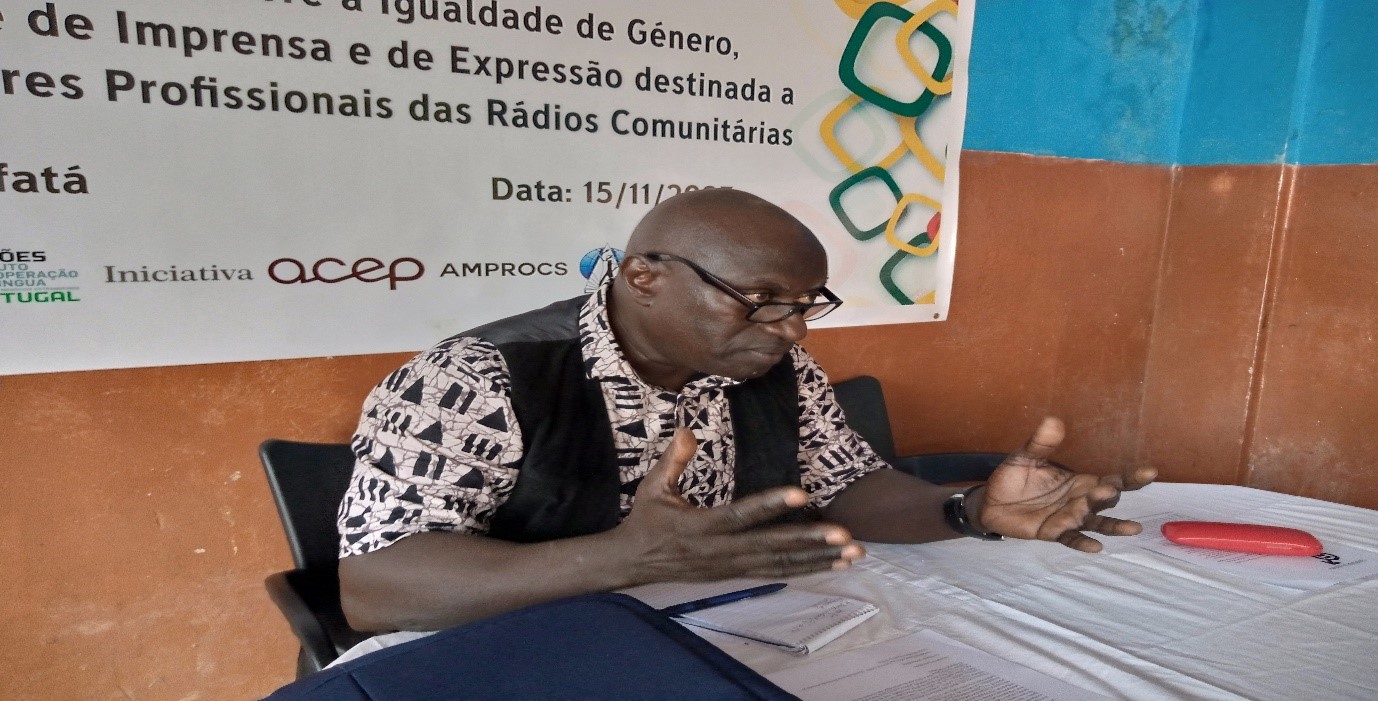
Salvador Gomes addressing issues of inequality between men and women
On the subject of freedom of the press and expression, the facilitator assured us that freedom of the press and expression must obey certain limits established by the constitution of the republic and the press law.
So much so that he advised the trainees not to use the microphones in an unbridled manner in order to damage the honor and good image of anyone.
During the training, the subject of press crime was also addressed. On this sub-theme, the facilitator made it known, based on press law, that matters under the secrecy of the courts must be avoided, otherwise a journalist could be guilty of committing press crime.
On the other hand, the facilitator advised professionals from community organizations to always obey the principle of objectivity, neutrality and contradiction when handling information
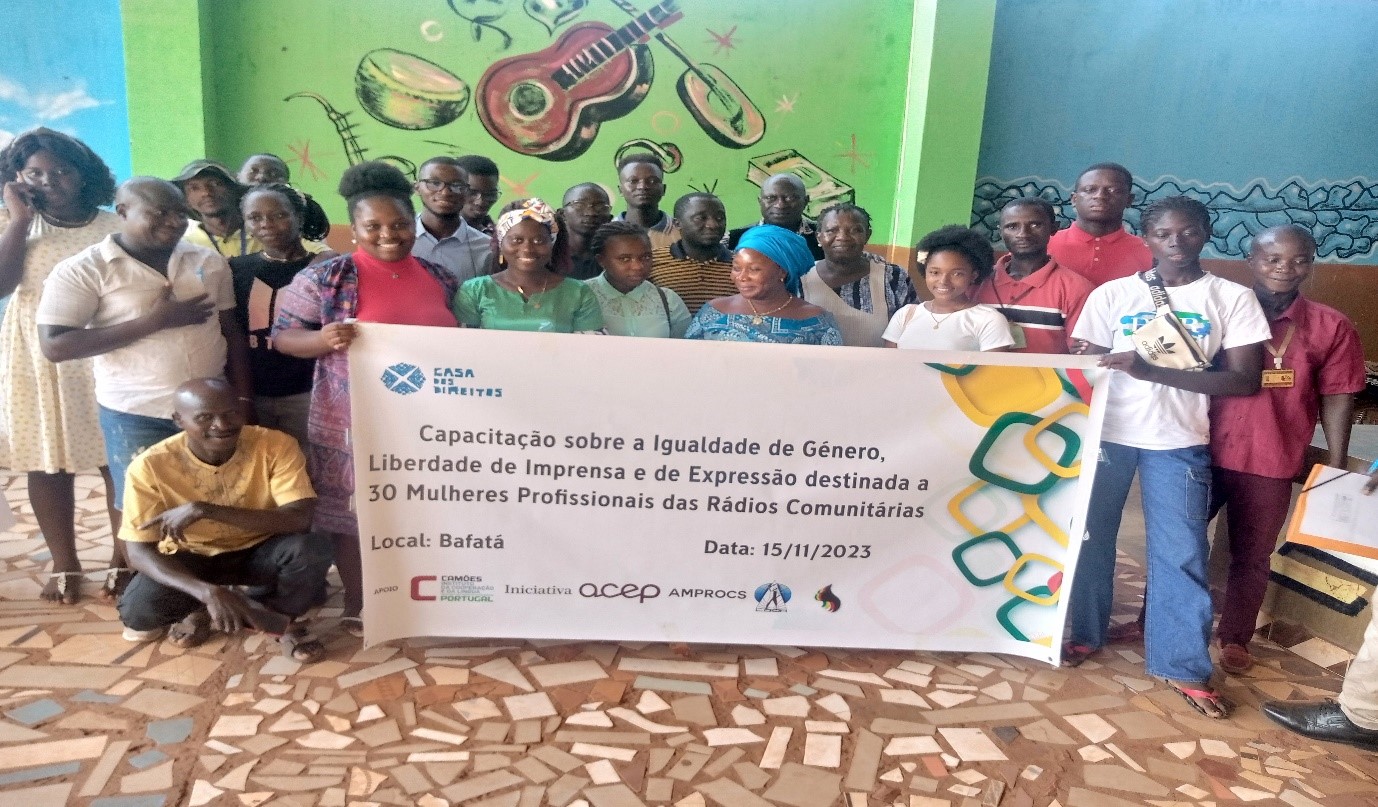
Training session on gender equality, freedom of the press and freedom of expression
During the debate, the trainees acknowledged that in recent times the journalistic profession has become complicated due to political interference and expressed their satisfaction with the new knowledge they had acquired on gender equality, freedom of the press and freedom of expression.
On the subject of Gender Equality, trainee Ruguiato argued that women should not continue to fight for emancipation in the sense of simply asking for opportunities, but rather in the context of a deserved conquest.
On the other hand, the participants committed to creating awareness programs to shape the conduct of parents in order to deconstruct cultural actions that penalize women at all levels.
Final recommendations
- Make women’s schooling a reality;
- That gender-based stereotypes are challenged;
- That women’s leadership be strengthened;
- That community radio professionals distance their actions from political orientations
- That the limits of freedom of the press and expression are observed.