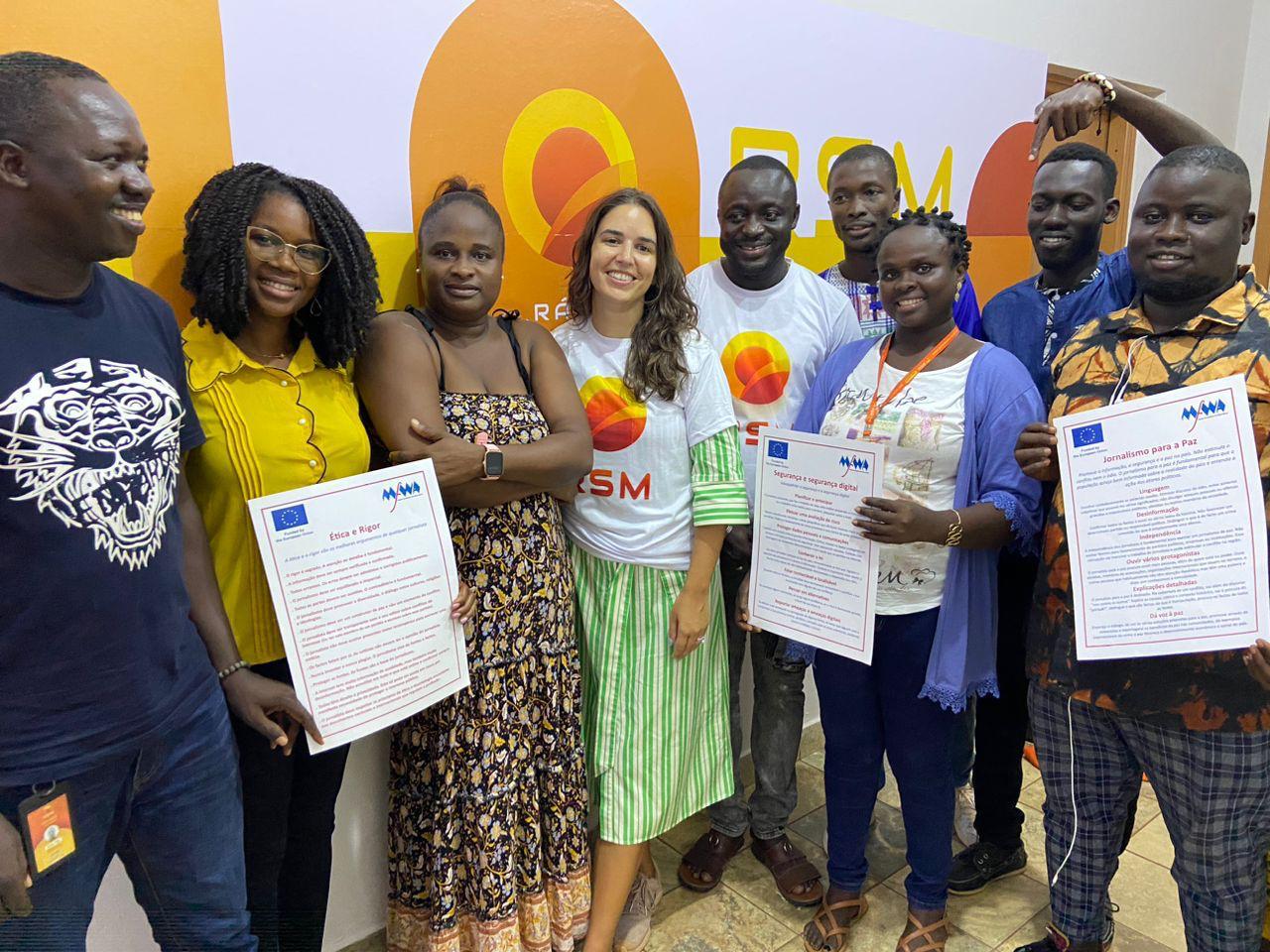
Beneficiaries of an intensive five-day training program as part of a Media Support Project implemented by the Media Foundation for West Africa (MFWA) say they have begun to see positive impacts as they apply the skills they have acquired in their work.
During a round of visits by the project team to evaluate the post-training impact, beneficiaries from ten leading media organizations that took part in the training shared very positive experiences of the practical application of the skills learned.
Among other things, the project team, led by Project Manager Abigail Larbi, heard that the beneficiaries are now managing their newsrooms better, improving their writing skills and framing the news better for their audiences.
The training consisted of a five-day intensive interaction on professional reporting, fact-checking, media ethics, accountability journalism, media management and digital security, organized by the MFWA as part of its project; “Promoting Media Freedom and Access to Quality Information in Guinea-Bissau”, implemented with the financial support of the European Union.
[robo-gallery id=”2093″]
As part of this project, journalists, editors and media managers from the ten main media organizations in Guinea-Bissau took part in training, coaching and mentoring sessions. As part of the post-training monitoring and evaluation, the project team, led by Abigail Larbi, returned to evaluate the beneficiaries first-hand.
An itinerary that guided the team’s visit saw them visit the beneficiary organizations, including at least five radio stations.
Testimonials
Among the beneficiary organizations visited were Rádio Sol Mansi, Rádio Mulher de Bafatá, Rádio Papagaio de Buba, Rádio Jovem and Rádio Capital FM. Below are some testimonies from the beneficiaries.
Sulai Seide, a journalist at Capital FM Radio, said: “The in-house training helped us a lot in managing our newsroom, especially when we received new trainees. It also allowed us to train them in the production and presentation of radio content. It has had a positive impact on the way we handle news, such as reducing the length of the headline and improving the writing style of the text, so that the audio complements the written text. It has also strengthened journalists’ security, as the station, Radio Capital FM, has been the target of attacks over the last three years.”
“Internally, we had a program to submit a training proposal to our colleagues, but unfortunately, due to a lack of resources, we couldn’t implement it. Fortunately, the MFWA came in and provided us with a week’s training. It was a positive meeting, as we better understood how to frame our information content and discuss the work agenda at editorial meetings. As a result of this training, I have observed how the team is assimilating this training into their work – for example, framing and contextualizing news, understanding an issue as a whole and prioritizing news after field reporting. It was an interesting experience,” added the Director of Capital FM Radio, Sumba Nansil.
“This training has helped us create radio content and draw up programming schedules and summarize news. We learned a lot of things we struggled with before, like writing program guides, reports or news. The training made everything easier.” Said Fatumata Binta Candé, Director of Radio Mulher Bafatá.
Aissatu Sibibe, journalist and editor-in-chief of Radio Mulher Bafatá, expressed her extreme gratitude on behalf of her colleagues and the community radio station for such an impactful mentoring and coaching session provided by the trainer, Catarina Rodriguez. “In fact, none of us here have any formal training in journalism; we’ve all only finished secondary school and we’re here to work; we’ve learned many things from the training we’ve received that we didn’t understand before. Now we understand how to work accurately, distinguish ethical and deontological issues, and aspects such as generating story ideas and constructing a text.”
The team also presented copies of the recently launched Comprehensive National Framework for the Safety of Journalists in Guinea-Bissau during World Press Freedom Day 2024, May 3, which was developed jointly by media and state actors, civil society, the judiciary, security and academia. It outlines roles, responsibilities and a complaint resolution mechanism to protect journalists.
The manager of Radio Papagaio de Buba, Luís da Silva, expressed the importance of the training: “The internal training was very beneficial. Previously, we didn’t organize editorial meetings before gathering information, but now we hold daily meetings. Another improvement is checking both sides of a story before publication, something we neglected before.”
Turé da Silva from Radio Sol Mansi also shared the impact of the training workshop “During the training week, we learned how to deal with news and phonetic pronunciation. The five-day training helped Sol Mansi stand out. From Monday, those who follow us online or on the radio will notice a different approach to our news.”
Impactful project
So far, the project: “Promoting Press Freedom and Access to Quality Information in Guinea-Bissau,” which began in June 2021, has provided training to at least 306 media professionals and key state actors in the country. The implementation of the project is guided by the vision of vastly improving journalistic standards in Guinea-Bissau, which has one of the most modest media standards in West Africa.
From the testimonies, it was clear that the internal mentoring and coaching activity within the Media Support project was particularly impactful. Braima Camara, Editor-in-Chief of Radio Kasumai, testifies to this. “This five-day training was very important because we realized that we were wasting a lot of time in the way we handled news. This training has transformed our daily work – starting with editorial meetings, group fieldwork and the way we deal with issues has brought us great success, something we’ve never done before. Radio Kasumai has now improved its way of making news. This training should not end here. I believe that the MFWA will do its best to continue visiting us and offering follow-up training.”